Sign in. It’s quick, free and it’s up to you.
An account is an optional way to support the work we do. Find out more.
Sign in. It’s quick, free and it’s up to you.
An account is an optional way to support the work we do. Find out more.
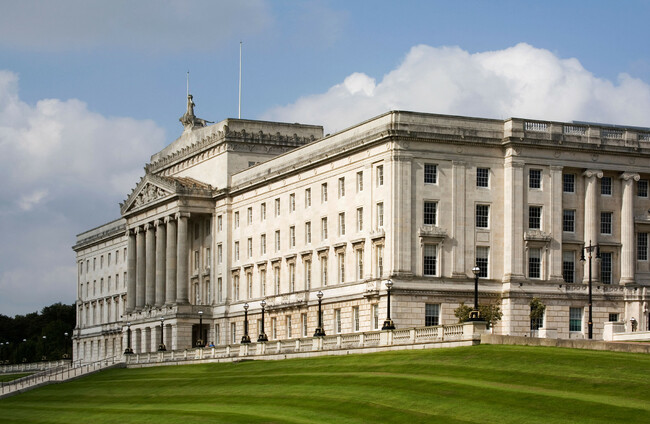
THE NORTHERN IRELAND Fiscal Council has warned there is a “structural tension” between the funding Stormont receives and the cost of maintaining its public sector workforce.
The Council noted that Stormont has “consistently demonstrated a desire to maintain pay parity with England”.
It said a decision on maintaining pay parity is one for ministers to make but warned that the “cost of maintaining public sector pay” at the levels desired by Stormont has “risen more quickly than the funding” provided from Westminster.
It added that this leaves a “range of unpalatable choices” for ministers when it comes to the public sector.
The Council said these choices include less generous pay or a reduction in public sector headcount.
It comes as Stormont ministers have said they cannot strike a budget for 2026/27 without additional financial support from Westminster.
A report published this week by the Council found that the public sector pay bill per head in Northern Ireland is up to 45% higher than in England, but the current funding per head is only 24% higher.
Stormont ministers have said they cannot strike a budget for 2026/27 without additional financial support from Westminster.
Devolved departments are currently allowed to spend up to 95% of last year’s funding in the absence of ministers agreeing the budget.
Stormont remains in negotiation with the UK Treasury over funding.
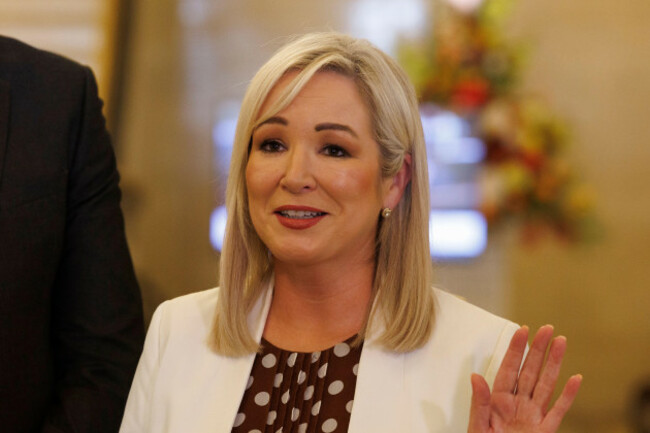
Earlier this month, the UK government upped a financial offer to Stormont ministers from £1.1 billion to £1.5 billion, in a bid to break an impasse over the devolved region’s budget, but Sinn Féin first minister Michelle O’Neill said it was not enough.
The budgetary impasse in the North caught the eye of The Economist recently, with an article titled: “Northern Ireland cannot balance its budget. Nobody cares.”
“Northern Ireland has become an unwelcome experiment in what happens when fiscal discipline collapses under Britain’s devolved constitution,” said The Economist.
It also accused politicians in the North of “ducking hard fiscal choices” and ignoring” budgets.
The Economist also remarked that “Northern Ireland is comparatively poor and generously funded by the British government”, pointing to a deficit per person of £7,600.
“The British government is not wholly insane,” added The Economist.
“Its overriding priority is to retain devolution in Belfast. If preserving devolution means periodically tossing in a few hundred million quid, it is better than civil war.”
The NI Fiscal Council provides independent scrutiny and transparency regarding public finances and Stormont spending, and its report is on the “growing challenge of funding public sector pay”.
While the public sector pay bill is currently around 24% higher per head in Northern Ireland than in England, the Council said the funding for “services comparable with those in England may be around 35 to 45% higher per head of population”.
The Council said this “creates a structural tension between the cost of maintaining the workforce and the funding available to do so”.
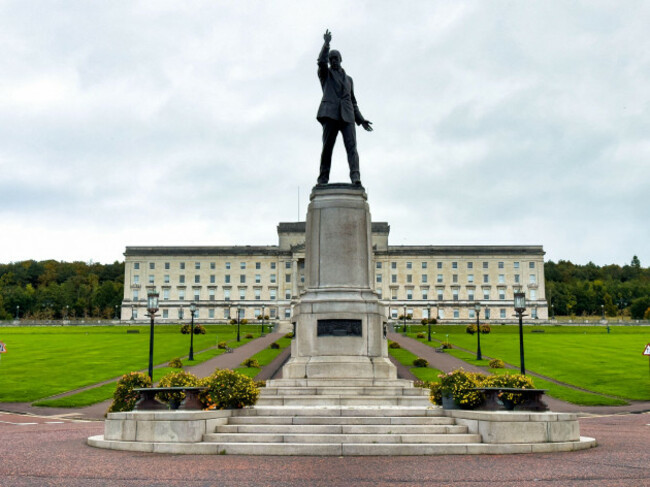
Robert Chote, chair of the Council, noted that “public sector pay is the single largest element of day-to-day spending funded by the Executive and an increasingly significant source of budget pressure”.
He said that the initial analysis suggests that the “challenge is not primarily about public sector workers in Northern Ireland being paid more than their counterparts elsewhere”.
“Rather, the evidence points towards the size and structure of the workforce and the way public services are organised and funded,” said Chote.
The Council said in its report that the cost of maintaining public sector pay in Northern Ireland has “risen more quickly than the funding generated through the Barnett formula when pay awards are made in England”.
The Barnett formula is used by the UK Treasury to calculate the annual block grants for the Scottish, Welsh and Northern Irish governments.
It takes the annual change in an English department’s budget and multiplies it to take account of the relative population and the extent to which the department’s services are devolved.
It also takes account of rates of deprivation, as well as the “unique policing/security needs” in Northern Ireland.

In 2024, a needs-based factor was also added to the Barnett formula for Northern Ireland, which was set at 124%.
Essentially, this means that Northern Ireland receives £124 per head for every £100 per head spent in England on comparable public services.
However, using “back-of-the-envelope calculations”, the Council questioned if this 124% figure was enough to match spending increases in England.
It said the bill for comparable services in Northern Ireland may be “around 34-45% higher per head in NI” than in England.
The Council meanwhile remarked that the “main reasons why the public sector pay bill” in Northern Ireland is “relatively high per head” compared to England is because the “workforce is relatively large” in Northern Ireland.
Northern Ireland currently employs around 40% more public sector staff per head than in England.
For example, one in 14 people in the North work in health, compared to one in six in England.
The Council noted that this leaves a “significant affordability gap between the 124% funding level and the higher staffing level”.
Another main reason the Council pointed to is Stormont “spending part of the Block Grant on pay for workers delivering services delivered by local authorities or the private sector in England”, such as water, transport and parts of social care.
This is something The Economist also criticised, stating that Stormont has created the UK’s “most generous free-travel scheme for pensioners, made medical prescriptions free, kept lower university fees and made Northern Ireland the only region without water charges”.
The Council warned the current 124% rate leaves a “range of unpalatable choices”, which include less generous pay, a reduction in public sector headcount, or a reduction in non-pay costs.
The Council said this would “reduce the quality and quantity of public services that the Executive can deliver”.
It added that Stormont could “raise additional revenue” but warned that this would “exacerbate pressures on household and business finances”.
The Council meanwhile said that “in practice”, Stormont departments have “resorted to overspending its budget” and that it has been “encouraged to do so by the UK Government’s willingness in recent years to bail out an overspending Executive”.
Chote remarked that the findings show why the “cost of maintaining public sector pay in NI appears to be rising faster than the funding generated through existing arrangements”.
Meanwhile, further education colleges across the North plan on cutting almost 8,000 student places for the 2026/27 academic year.
A Belfast Metropolitan College spokesperson said that the deadlock over a Stormont budget was partially responsible.
The SDLP’s Matthew O’Toole said this “shows the human impact of the Executive’s continuing failure to agree a Budget”.
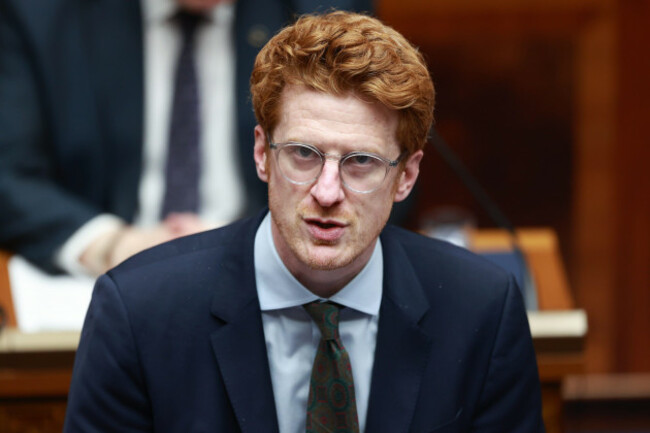
“The SDLP has been warning for months that failing to agree a Budget would have a serious impact on public services,” said O’Toole.
“We are now seeing what happens when the crisis around the Budget is allowed to drift without agreement.
“The longer this continues, the more people across Northern Ireland will pay the price.”

To embed this post, copy the code below on your site












have your say