Sign in. It’s quick, free and it’s up to you.
An account is an optional way to support the work we do. Find out more.
Sign in. It’s quick, free and it’s up to you.
An account is an optional way to support the work we do. Find out more.
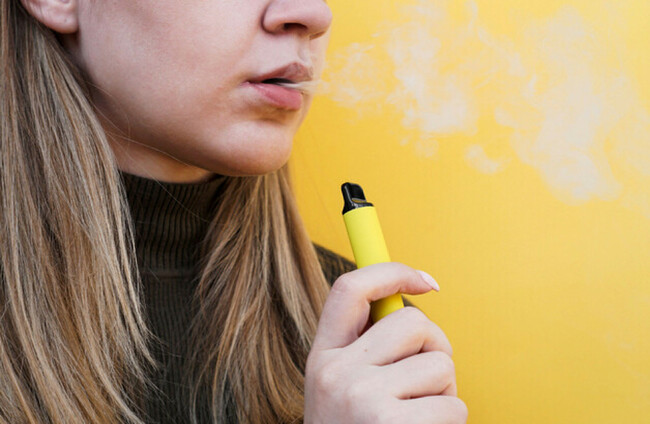
HIGH-RISK SYNTHETIC CANNABINOIDS have been found in vapes and products sold in shops in Ireland.
That’s according to the HSE’s early warning system for drugs.
The substances are linked to “serious physical and mental health harms”, including psychosis, loss of consciousness, and severe intoxication.
The health service’s national drug treatment centre lab has identified the cannabinoids in vapes, vape “juice” and edible products in shops and the illicit market.
A total of 76 vapes or vape juice have been analysed to date in 2026 and 28 contained synthetic cannabinoids or related compounds such as semi-synthetic cannabinoids.
Eight contained potent synthetic cannabinoids while 10 had an acetate-containing compound linked to lung disease.
A dozen had cannabis or related compounds while 41 contained CBD.
Elsewhere, over a third of clients at one of Ireland’s leading addiction treatment centres have reported three or more addictions.
The Rutland Centre today published its 2025 annual report and said the report highlights “growing pressure on treatment services as demand rises and people present with increasingly complex and multiple addictions”.
The report shows that almost two-thirds (64%) of those admitted to the centre’s residential and outpatient programmes reported two or more addictions, while 37% reported three or more.
Of the 36% of people presenting with a single addiction, over 70% have an alcohol addiction, while 14% have a gambling addiction.
Overall, alcohol was reported as problematic by 59% of admissions in 2025, and cocaine by 40%.
Gambling was cited by 15%, sex and/or pornography by 13%, and food or eating by 9%.
The centre noted that its report comes as the latest Health Research Board data recorded 15,422 treatment cases for problem drug use, excluding alcohol, in 2025 – a 16% on 2024.
Separate Health Research Board (HRB) data recorded 8,798 alcohol-treatment cases, the highest annual total in the nine-year period reported.
Maebh Mullany, chief executive of the Rutland Centre, remarked that both the “national data and our own experience point in the same direction”.
“Demand is rising and people are presenting with increasingly complex needs.”
The Rutland Centre said this “complexity” is also seen in HRB data, as almost one in three alcohol-treatment cases recorded by the HRB in 2025 involved problem use of another drug.
Among those cases, cocaine was the most common additional drug, reported in 72% of cases.
Meanwhile, Mullany said the centre is “already operating close to capacity, and access could become more difficult unless treatment capacity keeps pace”.
However, the centre said that against this “complex backdrop”, it reported a 98% completion rate for its residential programme and an 81% completion rate for its outpatient programme in 2025.
The centre also recorded 5,545 residential bed nights in 2025, an increase of 16% since 2021, with numbers rising each year over the five-year period.
Meanwhile, the Centre said it continued to “improve access for people who could not otherwise afford residential treatment”.
Nearly one-quarter of all treatment episodes delivered at the centre are now fully funded through the HSE Tier 4 referral scheme.
-With additional reporting from Press Association

To embed this post, copy the code below on your site












have your say