Sign in. It’s quick, free and it’s up to you.
An account is an optional way to support the work we do. Find out more.
Sign in. It’s quick, free and it’s up to you.
An account is an optional way to support the work we do. Find out more.
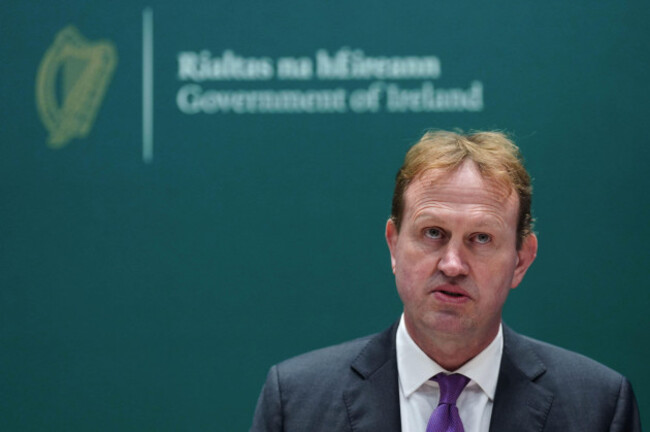
JUSTICE MINISTER JIM O’Callaghan deepened the row over legal aid reform this week when he suggested that the only cases deliberately affected by a withdrawal of solicitor services at the Central Criminal Court on Monday involved allegations of rape.
Speaking to the Oireachtas Justice Committee on Tuesday, O’Callaghan pointed to six adjourned rape trials and contrasted them with other proceedings that continued.
His remarks concern the ongoing dispute over criminal legal aid payments which has disrupted court proceedings across the country.
But what does the available evidence tell us about the cases affected, and does it establish that rape cases were singled out by striking criminal law solicitors?
In his opening statement to the Oireachtas Justice Committee on Tuesday, O’Callaghan expressed “deep concern that the only cases deliberately affected by the withdrawal of services in the Central Criminal Court [on Monday] were those involving allegations of rape”.
The minister then doubled down during his appearance, saying that he focused on the Central Criminal Court because that’s “where the campaign [withdrawal of services] was yesterday”.
“I was perfectly entitled to make the point I did,” he told TDs and senators.
“There’s no doubt about that. There was disruption to six rape trials in the Central Criminal Court yesterday and the only cases that were affected were rape trials that were going on yesterday.
“There were seven other cases that weren’t rape trials, which were ongoing, that weren’t affected.”
O’Callaghan also said all the cases that were adjourned the previous week on 12 October, and all cases adjourned the week before that again on 5 October – four cases on each day, for a total of eight cases – involved rape.
He said: “I am not trying to antagonise solicitors, but I do have a responsibility to point out the information that is given to me by the Courts Service.”
The Journal examined court reporting and court lists, and asked the minister’s office for the information underpinning his comments.
First, let’s look at the cases the minister was referring to.
We asked O’Callaghan’s office this week why he specifically focused on the Central Criminal Court when discussing Monday’s action, and whether he was aware of other cases that were disrupted in the Circuit Criminal Court the same day, which was sitting in the same building.
We also asked whether he accepted that cases involving other offences had been affected during the dispute, and what information the Courts Service had supplied about proceedings on 5, 12 and 19 October, including which courts it covered.
In response, the Department of Justice reiterated that six cases involving rape allegations were adjourned at the Central Criminal Court on 19 October because solicitors withdrew their services.
Of 12 new trials due to begin on Monday, it said two had juries sworn and were due to begin that day, one resulted in a guilty plea, and three were adjourned until the following day for reasons unrelated to the withdrawal of services. The remaining six were adjourned because of the dispute.
The response also cited an 8% increase in criminal legal aid fees for solicitors and barristers in the Circuit Court and higher courts from July, arguing that the withdrawal of services was unnecessary.
However, it did not explain why the minister focused on the Central Criminal Court, say whether he knew about the Circuit Court cases which were taking place in the same building and which were also impacted by the strike, or address whether other offences had been affected across the dispute.
Nor did it provide the requested detail about the Courts Service information for 5 and 12 October, or clarify the full scope of the information supplied to him.
Contemporaneous reporting places the six adjournments before Judge Paul McDermott in Courtroom 6 of the Criminal Courts of Justice.
That courtroom deals with cases in the Central Criminal Court, which tends to handle the most serious proceedings involving things like murder, manslaughter, rape, serious sexual assault, and treason.
RTÉ’s Legal Affairs Correspondent Órla O’Donnell reported that six of the 13 cases in front of Judge McDermott in the Central Criminal Court on Monday were affected by the legal aid dispute.
All of those cases were reported to have involved rape or serious sexual assault.
The diary for Monday 19 October on the Courts Service website listed 13 cases before Judge McDermott in Courtroom 6.
Information provided in advance of Monday’s hearings to The Journal by CCC Nuacht, a court-reporting news agency, stated that 10 of those cases were listed for sexual assault; two others were listed as ‘no info’ (the thirteenth case was not listed in the diary at the time it was sent the previous Friday).
But Courtroom 6 does not appear to have been the only place affected by the dispute on Monday.
RTÉ reported that solicitors withdrew their services in three cases at the Circuit Criminal Court, in proceedings overseen by Judge Martin Nolan in Courtroom 5 in the same building.
The Circuit Criminal Court tends to hear less serious crimes than the Central Criminal Court (though it still deals with serious cases), including proceedings involving burglary, robbery, and major assaults.
It is not clear which specific cases were affected and the Courts Service diary states that Judge Nolan was set to preside over 58 cases on Monday, which included routine hearings where cases were mentioned, arraignment hearings and sentencings.
The Circuit Court disruption shows that Monday’s withdrawal of services extended beyond the Central Criminal Court.
These were two of the courtrooms sitting in the Criminal Courts of Justice building on Monday.
Central Criminal Court cases were also being heard in front of seven judges, while seven judges also heard cases at Circuit Criminal Court level.
The Department of Justice said that all 11 assigned Central Criminal Court judges were occupied with ongoing trials or sentencing matters.
However, judges continuing to work does not establish that every case listed before them proceeded, and the response did not provide a case-by-case account.
The Department of Justice also distinguished between ongoing trials and new trials.
But these are different stages of proceedings, so the fact that some continued while others were adjourned does not establish that the alleged offence determined which cases were affected.
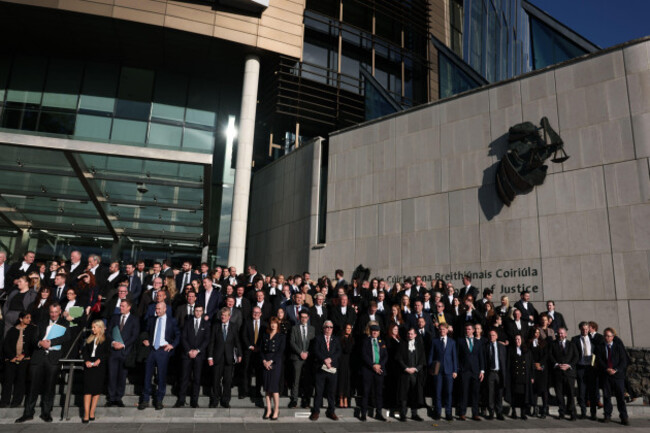
The strike has also impacted dozens of other serious cases before this.
The Journal has identified at least 24 examples in local and national reporting of cases adjourned or disrupted by the withdrawal of solicitors’ services since June.
The Courts Service records adjournments but does not keep data on the reasons for them; those records therefore cannot provide a total for adjournments caused by the dispute.
The affected proceedings span murder, conspiracy to murder, assault, arson, robbery, burglary, theft, harassment, money laundering, drugs, weapons, public order, violent disorder, driving and sexual offences.
Reports covering wider court lists also identify fraud, coercive control, threats to kill and possession of child sexual abuse material among the offences affected.
At Dundalk Circuit Court on 16 June, a jury already sworn for a money-laundering trial was discharged after the court heard the defence solicitor would be withdrawing his services, according to local radio station LMFM.
That trial was adjourned until this month.
At Mullingar Circuit Court in July, a man’s trial for allegedly causing serious harm to a woman at a church in Athlone was also postponed because the defence lacked instructions, the Westmeath Independent reported at the time.
District Court proceedings have also been affected.
The Irish Examiner reported in June that books of evidence were ready to be served on two pro-Palestine protesters charged with burglary involving alleged criminal damage at Collins Aerospace in Cork.
The pair’s cases were adjourned in June because their solicitor could not act during the dispute.
In another case reported by the Roscommon Herald, the trial of a man charged with murdering his mother also experienced repeated delays to service of his book of evidence at Cork District Court.
Sentencing hearings have been postponed too.
These include four men who pleaded guilty in the €31 million Courtmacsherry cocaine case and a sentencing for conspiracy to murder at the Central Criminal Court.
More recently, CCC Nuacht reported that sentencing cases involving fraud, money laundering, burglary and drugs were adjourned at Dublin Circuit Criminal Court on 5 October.
Two trials involving dangerous driving causing death and careless driving causing death were also postponed because defence barristers were neither attended by solicitors nor instructed.
Criminal defence solicitors have also strongly denied they are deliberately targeting rape cases, with one such solicitor, Eoghan O’Sullivan, remarking this week that O’Callaghan’s claim was “beneath the dignity” of his office.
“Solicitors withdrew their services from all courts yesterday including the district, circuit and central criminal courts right across the country,” he said on Tuesday.
“It is very disappointing the minister has cherry picked rapes cases to advance his own position.”
O’Callaghan said the only cases deliberately affected by solicitors withdrawing their services at the Central Criminal Court on Monday involved allegations of rape.
Contemporaneous reporting confirms that six trials involving rape or serious sexual offences were adjourned because of the dispute. The Department of Justice said that all six involved rape allegations.
However, identifying which cases were adjourned does not, by itself, establish that solicitors selected them because they involved rape.
The minister contrasted those adjournments with ongoing proceedings that continued.
His response did not provide a case-by-case explanation establishing that the difference was attributable to the alleged offences, rather than other circumstances surrounding the proceedings.
There is also clear evidence that the dispute has affected cases involving many other offences, including proceedings in the Circuit Criminal Court on the same day.
This provides relevant context, although it does not directly disprove a claim confined to the Central Criminal Court.
The minister’s response did not address our questions about those other courts or provide the requested information about the two earlier Mondays he cited.
The six adjournments are therefore supported by reporting.
However, by contrasting adjourned rape trials with other proceedings that continued, without establishing why those cases were affected differently, O’Callaghan presented an incomplete picture that suggested rape cases had been singled out.
His account also omitted disruption elsewhere, despite his explanation that he focused on the Central Criminal Court because that was where the campaign occurred.
The suggestion that rape cases were specifically singled out for disruption is therefore MISLEADING. As per our verdict guide, this means the claim either intentionally or unintentionally misleads readers.
The Journal’s FactCheck is a signatory to the International Fact-Checking Network’s Code of Principles. You can read it here. For information on how FactCheck works, what the verdicts mean, and how you can take part, check out our Reader’s Guide here. You can read about the team of editors and reporters who work on the factchecks here.

To embed this post, copy the code below on your site













have your say