Sign in. It’s quick, free and it’s up to you.
An account is an optional way to support the work we do. Find out more.
Sign in. It’s quick, free and it’s up to you.
An account is an optional way to support the work we do. Find out more.
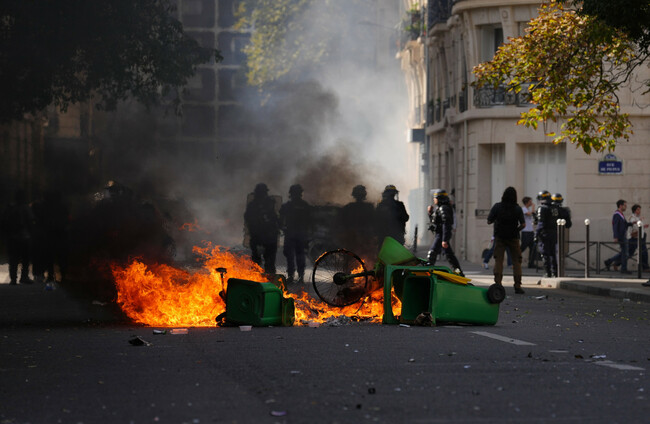
UP TO 500 schools across France will be totally or partly closed on Monday due to the protests by teenage pupils that have shaken the country, a government minister has said.
Lessons will be “totally or partly suspended” in some “400-500″ high schools as the security conditions “have not been fulfilled,” said Education Minister Edouard Geffray on Sunday, adding that 24 schools had been “burned or ransacked” since the start of the movement.
The teens at French high schools, known as lycees, say that their studies are being ruined by high teacher absences, overlong school days and dilapidated facilities, as well as other grievances.
Geffray said the number of schools affected on Monday would be comparable to the figure from Friday but vowed there would be a “partial, progressive return to lessons”.
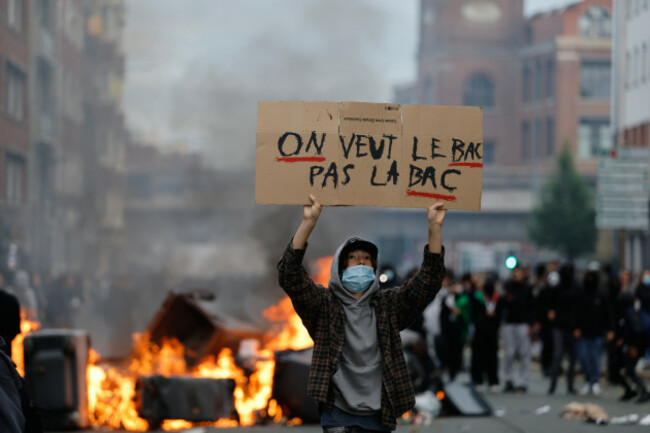
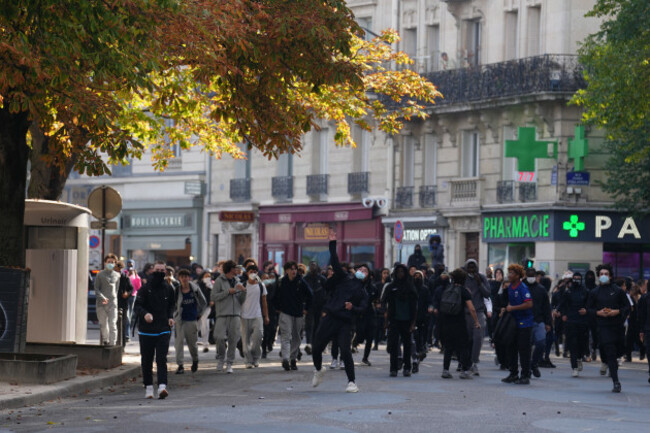
The movement began at a Paris school on 17 September but grew last week into nationwide protests marked in places by outbursts of violence involving teenagers and security forces, which sometimes used tear gas and batons to disperse the children.
“There are activists – particularly from the far-left – who have infiltrated the high school student movement, hijacked it from the students themselves, and engaged in extreme violence,” Geffrray claimed.
“Clearly, this poses a risk to both our staff and our students,” he alleged, adding that 78 education staff members had been wounded — “something we have never seen before”.
“They were deliberately targeted because they were employees of the national education system,” Geffray claimed.
Organisers have called for the protests to continue on Tuesday, citing a lack of “concrete measures” from the government.
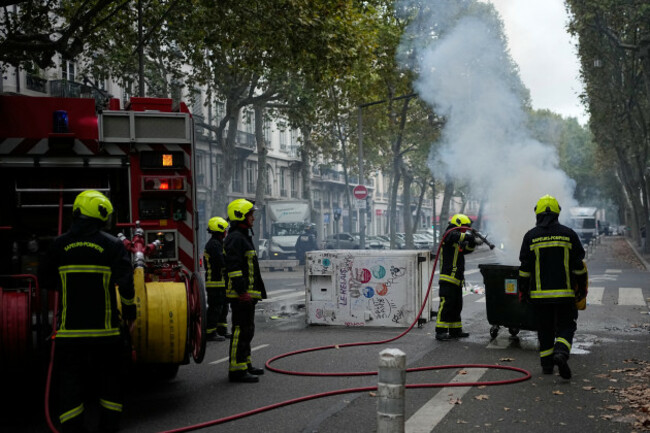
Over 5,000 people, 85% of them minors, have been arrested since the start of the movement.
Critics have accused police of heavy-handed tactics.
A 16-year-old was detained on Sunday over the assault of a teacher in the southern town of La Ciotat. The teacher, 59, was doused with petrol and struck on the sidelines of a high school student protest on Friday.
A video circulating on social media shows an individual dressed entirely in black with a masked face splashing liquid onto the teacher, who then clutches his face while a tree burns nearby.
The protests affect lycées, the schools where French teens have their last years of school aged from 15-18, the equivalent of Leaving Cert in Ireland and of high school in the United States.
The students’ grievances are numerous, but chief among them are teacher absences, conditions in classrooms, overloaded school timetables and a school day that can be as long as 8.00 am to 6.00 pm, which some say is excessive.
“High-school students — particularly those from low-income neighbourhoods — feel they are receiving an inferior education,” said French sociologist Valerie Becquet.
The movement began two weeks ago on 17 September at the Saint-Exupery high school in the Paris suburb of Creteil, in support of teachers striking over a lack of staff and resources.
It gained momentum, gradually spreading across the country over the last week.
Ironically, as tensions raged elsewhere in France, the situation at the Saint-Exupery high school returned to normal after educational authorities agreed to send additional staff, including a deputy principal and a nurse.
“Our grades were slipping. If we had not rallied now, it would have augured very badly for the future,” said pupil Abderrahmane, who expressed “enormous” pride at taking part in the inception of the movement.
The protests are being further fuelled by the spread of dramatic images and videos on online platforms, notably TikTok.
Students themselves hold up their phones to record scenes such as burning rubbish cans or police deploying tear gas. Numerous channels, seeking to boost their reach, spread this footage and edit together the most dramatic moments.
“With social media, they can offer a narrative different from the one presented in traditional media – a narrative that is not manufactured,” said sociologist Becquet.
France offers all students access to the lycee but in reality there is a vast spectrum, ranging from vocational schools to elite institutions.
Despite numerous diversity initiatives, the latter remain dominated by students from white, affluent families with university-educated parents.
“There are glaring inequalities among different students and schools, and this is a real problem,” said Becquet.
With reporting by – © AFP2026

To embed this post, copy the code below on your site















have your say