Sign in. It’s quick, free and it’s up to you.
An account is an optional way to support the work we do. Find out more.
Sign in. It’s quick, free and it’s up to you.
An account is an optional way to support the work we do. Find out more.
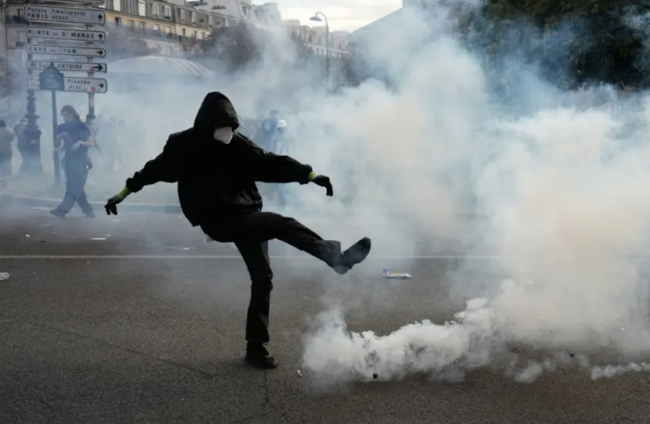
MASS PROTESTS OVER conditions at France’s high schools descended into sporadic violence today, leading to nearly 500 arrests and prompting President Emmanuel Macron to call an emergency meeting.
The protests started in late September with students blocking entrances to hundreds of high schools for 15- to 17-year-olds over complaints of dilapidated facilities and teacher shortages.
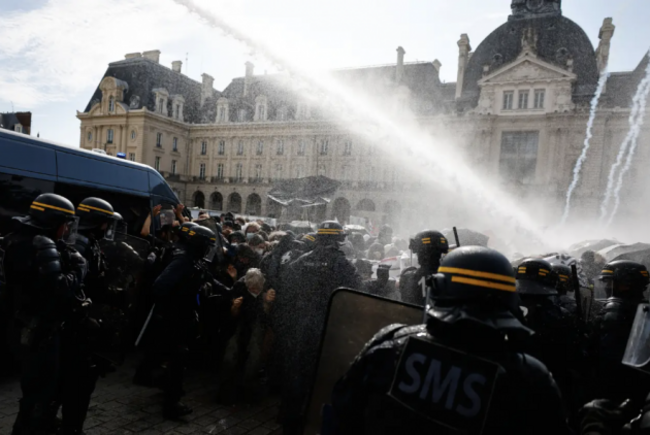
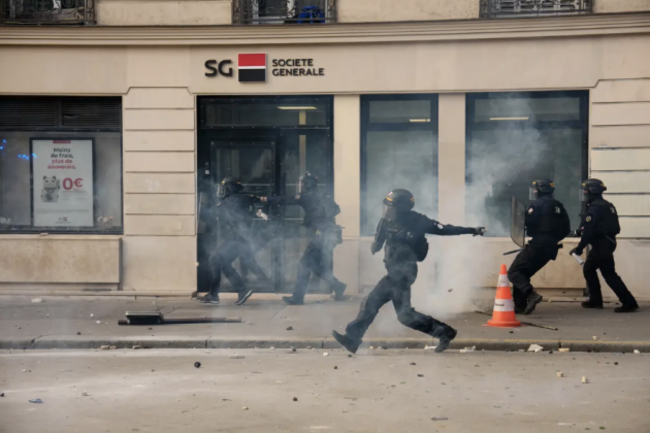
Today, police fired tear gas to control crowds in Paris and elsewhere in France as more than a quarter of a million people rallied to support school pupils demanding more education funding.
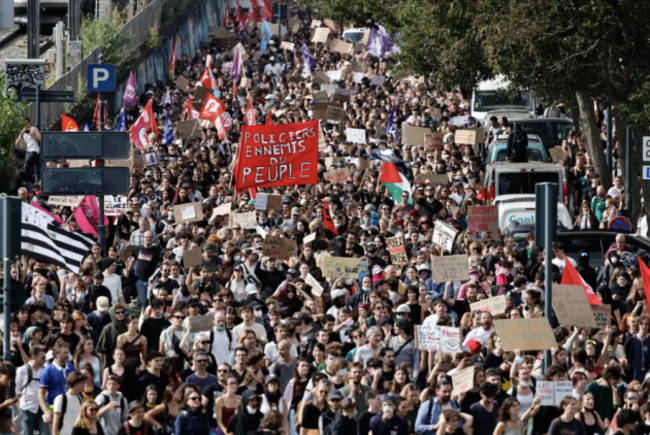
The protests increased pressure on the administration of outgoing President Emmanuel Macron.
As pupils again blockaded high schools, large crowds waving flags and placards gathered in Marseille, Strasbourg and other cities.
The demonstrations showed how protests that began at a high school in the Paris region in mid-September have grown into a nationwide movement — the latest of many that have marked Macron’s nearly decade-long tenure.
“We need to listen to them,” said Lea Monimart, a demonstrator in the northern city of Lille.
“They are 17-years-old; they are not completely clueless, and they know what they are talking about.
“It’s important to show that there are adults who support them.”
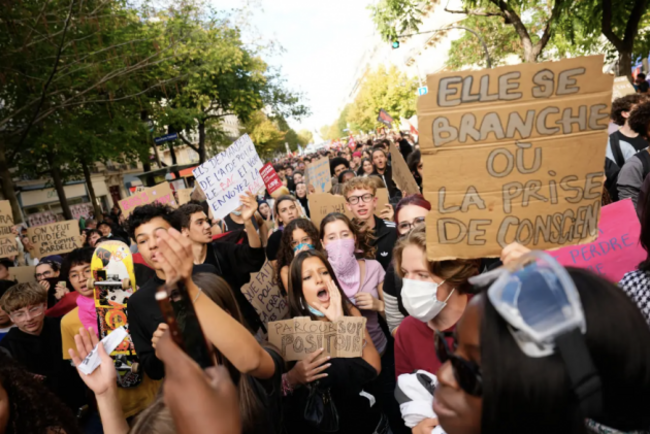
The Interior Ministry estimated that 256,000 people took part in demonstrations across the country on Tuesday, including 56,000 in Paris, where small groups of protesters clashed with riot officers at a city square during a largely peaceful march through the city.
The widespread use of arrests, tear gas and riot-control weapons against teenagers is fuelling defiance and angering some parents and teachers.
Interior minister Laurent Nunez said the police response had been proportionate in “almost all cases” and that the protests had at times turned into riots, requiring police intervention.
French prime minister Sebastien Lecornu said the government and school leaders must listen to students’ concerns and find solutions.
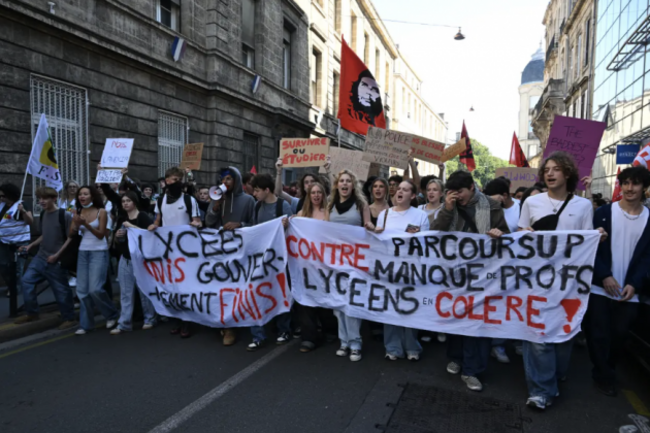
Questioned in parliament on Tuesday about the protest movement, Mr Lecornu denounced “ultra violence” threatening schools.
Responding to criticism of police tactics, he pledged that any “accidents” would be investigated and described allegations that the police are racist as a “lie”.
More than two weeks of class boycotts and school blockades, and policing that has led to more than 6,100 arrests, mostly of minors, have become a flashpoint in the early days of the presidential election campaign.
Felix Barney, a university student, described the police response as disproportionate, saying it does not make “any sense to hit minors”.
“Riot police, batons, rubber bullets, tear gas,” said Aurelien Le Coq, a legislator with the far-left France Unbowed party.
Its presidential candidate is strongly backing the protests.
The violence is “absolutely unbearable”, Le Coq said.
Nunez defended police tactics despite a growing number of severe injuries blamed on officers’ riot-control weapons.
In the latest case, a 15-year-old boy lost a hand on Monday in an incident involving a police stun grenade.
He said 715 officers had been injured.
The teenage protesters have struck a chord amid widespread discontent in France.
Frustrations extend beyond immediate difficulties, such as fuel prices that have soared because of the Iran war, to broader concerns about constraints on public spending, rising poverty and wealth inequality under Mr Macron, who cannot run for a third consecutive term.
Against that backdrop, pupils’ complaints that education funding shortfalls are endangering their futures have found a sympathetic audience.
“You say ‘young people are the future’, so listen to them”, read a handwritten placard attached to a metal barrier outside a Paris school.
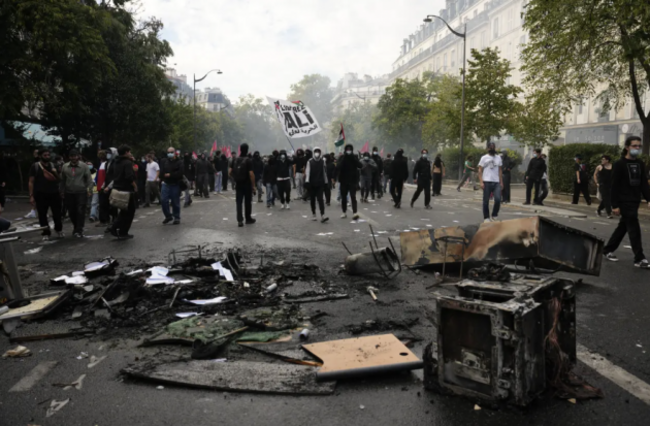
At the Helene Boucher lycee, or high school, in Paris’ 20th district, protesters tipped over rubbish bins and bicycles onto their sides to create a makeshift barricade.
Like hundreds of others around the country, the school was closed.
Authorities began shutting schools last week to take some steam out of the demonstrations after widespread damage to schools and mounting injuries among staff, students and police.
Classes were totally or partially suspended on Tuesday at 891 schools, according to the Education Ministry.
Facing accusations that it was ignoring protesters, the ministry launched an online portal inviting high school students to anonymously describe the difficulties they face at school and the changes they want to see.
At Helene Boucher, parents and other adults positioned themselves on Tuesday between protesters and police keeping watch.
“They are our children. Teachers, parents, federations, we all share the same goal: the protection of children’s rights, and it is a legitimate right to demonstrate and to make demands,” said Emilia Sichili Suriam, who is a member of an association of parents.
Demonstrators have voiced a range of grievances, often centring on a lack of resources and opportunities for students in disadvantaged schools, despite the promise of France’s national motto: “Liberty, Equality, Fraternity”.
Students have drawn attention to rundown classrooms that lack basics such as desks and chairs, become sweltering in summer without air conditioning and, in some cases, are infested with rats.
Other common complaints include staff shortages and exhausting workloads.
French high school students’ compulsory classroom hours are among the highest in Europe.
Suzanne Nijdam, president of the federation of student associations, vowed that demonstrations would continue until authorities address the complaints.
“So, we really need to act now, and it’s in the government’s hands, to see these demands through to the end,” she said.
“It’s a matter of political priority, a matter of prioritising the youth and the future of our country.”
To embed this post, copy the code below on your site














have your say