Sign in. It’s quick, free and it’s up to you.
An account is an optional way to support the work we do. Find out more.
Sign in. It’s quick, free and it’s up to you.
An account is an optional way to support the work we do. Find out more.
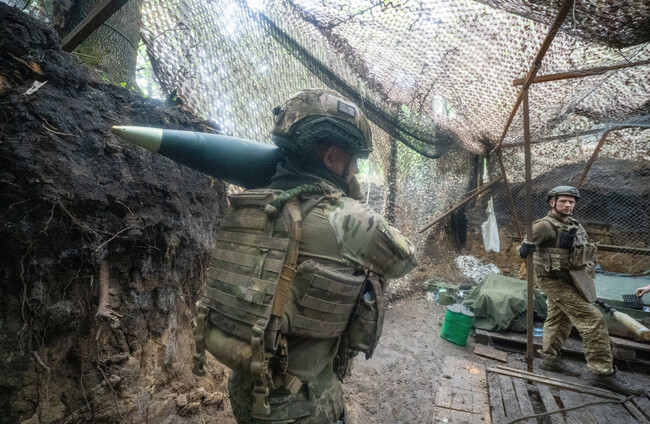

IRELAND IS TO give €10 million to fund the construction of military training facilities inside Ukraine as Helen McEntee said she believes Russia is now actively taking offensive action against European countries.
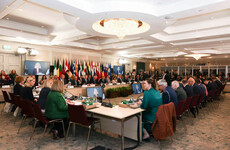
McEntee, Minister for Defence and Foreign Affairs, made the announcement during a press conference in Druids Glen, Co Wicklow during an informal defence ministers meeting today.
The meeting came as the German government today blamed Russia for a “hybrid attack” involving an explosive-laden drone at Leipzig airport.
Germany has for months reported suspicious drone sightings over military and industrial sites, but the Leipzig incident raised the alarm as a drone found there carried explosives.
European Commission president Ursula von der Leyen expressed “full solidarity” with Germany over the attack, with Nato also saying that it would defend its members.
This morning I spoke with Chancellor Merz to discuss the hybrid attack at Leipzig airport.
— Ursula von der Leyen (@vonderleyen) September 1, 2026
I assured him that the EU stands in full solidarity with Germany in the face of this attack by Russia.
We will keep the EU united despite these escalating and serious acts. The German…
“Nato will continue to strengthen our ability to deter and defend all Allies against any threat – including malign actions like those seen in Leipzig and elsewhere across the Alliance,” said Nato Secretary General Mark Rutte.
In Wicklow, Ukraine discussions at the conference have included considerations around the provision of patriot missiles to be used against ballistic missiles. This would be stocks from countries in which their rockets are close to their use by date.
More broadly there have also been considerations of funding that would assist Ukraine deal with the impending winter as Russia is set to target electricity supply.
Ireland has already announced a €125 million package announced in July. McEntee has now announced that the military training funding will come out of that package.
McEntee added that Denmark will also provide €3 million for the project to enhance training of soldiers.
Ireland has sent Irish Defence Forces personnel to Europe to train Ukrainian soldiers in combat drills, mine clearance and battlefield medical care.
The Irish government had previously said it would not provide offensive supplies such as weapons and ammunition. It has provided former army vehicles to Ukraine also.
The move by Ireland is a change in policy and now provides direct funding to the Ukrainian military as part of the EU’s training mission in the country.
McEntee described the facility, which will be funded by Ireland as a “critical piece of infrastructure for them in their combat and in their training priorities at the moment”.
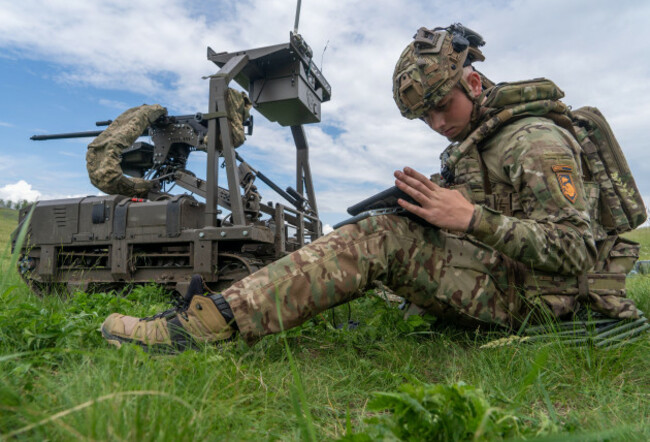
In strong language, the foreign minister described incursions into the airspace and on the ground of European countries as offensive operations by Russia.
McEntee referenced the Leipzig attack on 4 August when German police were forced to use a robot to defuse the device near a Ukrainian cargo plane. Another drone was reportedly found weeks later near the airport, also with traces of an explosive substance.
The Minister also spoke about land and air incursions by Russia in Romania, Latvia and Estonia – as recently as this week.
McEntee added that it is critical to give support to Ukraine to apply pressure on Russia.
“I think that’s something that is understood by Irish people. But it is really important that we get that message across that the threat is not just a threat.
“These are actions that we are now starting to see occur into European and into EU member states, and we need to be working closely together, providing support and assistance in whatever way that we possibly can,” she explained.
EU foreign policy chief, Kaja Kallas, speaking at the same press conference, said she is to form a specialist group of European countries to monitor and decide on actions in response to Russian activity.
“I feel that Russia is testing us all the time, getting a bit further, a bit further, and that’s why we really need to respond,” she added.
As a response to the Leipzig attack, Berlin is to close Russia’s consulate in the former capital Bonn later this month, and cancel the lease for the Russian House, a cultural centre in the capital city.
With reporting by © – AFP 2026

To embed this post, copy the code below on your site











have your say