We need your help now

Support from readers like you keeps The Journal open.

You are visiting us because we have something you value. Independent, unbiased news that tells the truth. Advertising revenue goes some way to support our mission, but this year it has not been enough.

If you've seen value in our reporting, please contribute what you can, so we can continue to produce accurate and meaningful journalism. For everyone who needs it.

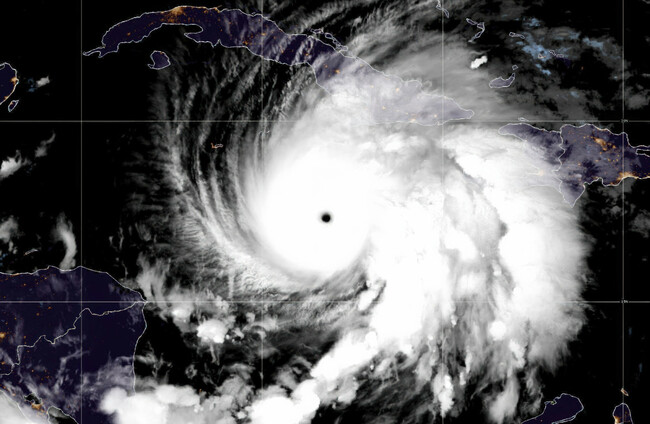
Satellite image showing Hurricane Melissa bearing down on Jamaica Alamy Stock Photo

Hurricane Melissa loses strength en route to Cuba after wreaking 'disaster' in Jamaica

The storm caused widespread destruction in Jamaica as one of the most powerful hurricanes on record there.

HURRICANE MELISSA WEAKENED to a category 3 storm before reaching Cuba on Wednesday, US weather officials said.

The storm caused widespread destruction in Jamaica as one of the most powerful hurricanes on record there, lashing the island nation with brutal winds and torrential rain.

“Melissa is expected to remain a powerful hurricane when it moves across Cuba and the Bahamas and passes near Bermuda,” the National Hurricane Center (NHC) said in its latest advisory.

The storm took hours to cross over Jamaica, a passage over land that diminished its winds, dropping down to a Category 3 – from the maximum level 5.

It is the most powerful storm seen anywhere in the world so far this year – something experts are putting down to a warming climate.

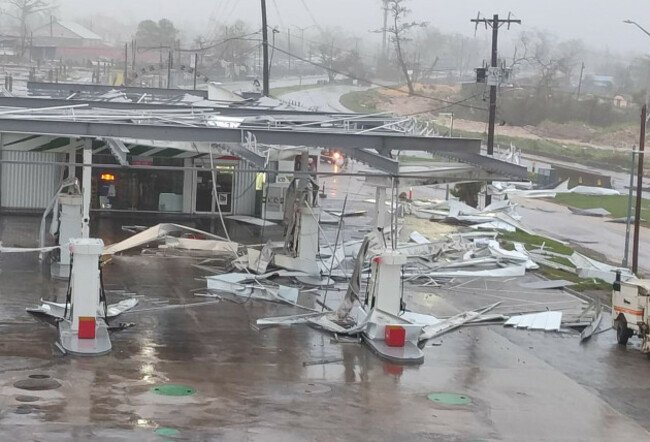
251029-montego-bay-oct-29-2025-xinhua-this-photo-taken-on-oct-28-2025-shows-a-gas-station-damaged-by-the-hurricane-melissa-in-montego-bay-jamaica-at-least-seven-people-were-killed-acr A gas station damaged by the Hurricane Melissa in Montego Bay, Jamaica. Alamy Stock Photo Alamy Stock Photo

‘Disaster area’

Jamaican Prime Minister Andrew Holness declared the island a “disaster area” and authorities warned residents to remain sheltered over continued flooding and landslide risk, as dangerous weather persisted even as the hurricane’s worst moved on.

The Journal / YouTube

Lisa Sangster, a 30-year-old communications specialist in Kingston, said her home was devastated by the storm.

“My sister… explained that parts of our roof was blown off and other parts caved in and the entire house was flooded,” she said.

“Outside structures like our outdoor kitchen, dog kennel and farm animal pens were also gone, destroyed.”

The scale of Melissa’s damage in Jamaica was not yet clear: a comprehensive assessment could take days and much of the island was still without power, with communications networks badly disrupted.

At its peak, the storm packed ferocious sustained winds of 297 km/h per hour. Immediate details regarding casualty figures were not available.

Government minister Desmond McKenzie said several hospitals had been damaged, including in Saint Elizabeth, a coastal district he said was “underwater.”

“The damage to Saint Elizabeth is extensive, based on what we have seen,” he told a briefing.

“Saint Elizabeth is the breadbasket of the country, and that has taken a beating. The entire Jamaica has felt the brunt of Melissa.”

The hurricane was the worst to ever strike Jamaica, hitting land with maximum wind speeds even more potent than most of recent history’s most brutal storms, including 2005′s Katrina, which ravaged the US city of New Orleans.

‘Severely damaged infrastructure’

Even before Melissa slammed into Jamaica, seven deaths – three in Jamaica, three in Haiti and one in the Dominican Republic – had been blamed on the deteriorating conditions.

Jamaica’s climate change minister told CNN that Melissa’s effect was “catastrophic,” citing flooded homes and “severely damaged public infrastructure” and hospitals.

Mathue Tapper, 31, said that those in the capital were “lucky” but feared for fellow Jamaicans in the island’s more rural areas.

“My heart goes out to the folks living on the Western end of the island,” he said.

Climate change impact

Broad scientific consensus says human-driven climate change is responsible for intensified storms like Melissa, that are increasingly frequent and bring higher potential for destruction and deadly flooding.

Melissa lingered over Jamaica long enough that the rains were particularly dire.

“Human-caused climate change is making all of the worst aspects of Hurricane Melissa even worse,” said climate scientist Daniel Gilford.

The Jamaican Red Cross, which was distributing drinking water and hygiene kits ahead of infrastructure disruptions, said Melissa’s “slow nature” exacerbated the anxiety.

The UN is planning an airlift of some 2,000 relief kits to Jamaica from a relief supply station in Barbados once air travel is possible.

Assistance is also planned to other impacted countries including Cuba and Haiti, UN spokesperson Stephane Dujarric told journalists.

Jamaican officials said around 25,000 tourists were in the country famed for its normally crystalline waters.

Author
View 11 comments
Close
11 Comments
This is YOUR comments community. Stay civil, stay constructive, stay on topic. Please familiarise yourself with our comments policy here before taking part.
Leave a Comment
    Submit a report
    Please help us understand how this comment violates our community guidelines.
    Thank you for the feedback
    Your feedback has been sent to our team for review.

    Leave a commentcancel

     
    JournalTv
    News in 60 seconds