Sign in. It’s quick, free and it’s up to you.
An account is an optional way to support the work we do. Find out more.
Sign in. It’s quick, free and it’s up to you.
An account is an optional way to support the work we do. Find out more.
LAST UPDATE | 1 hr ago
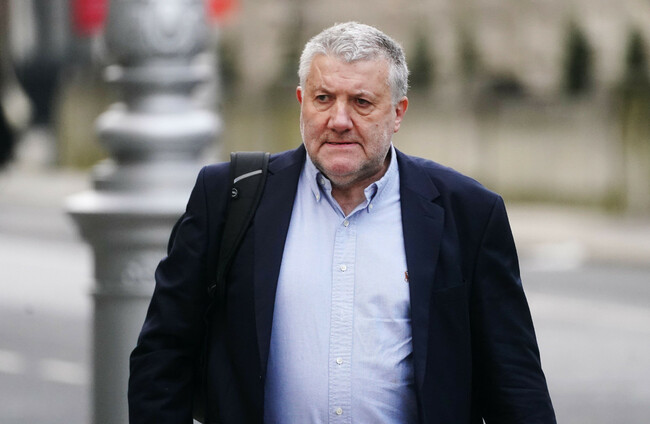
FAI PRESIDENT PAUL Cooke has defended the football association’s handling of the Irish team’s controversial fixture against Israel Sunday night.
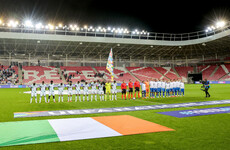
Cooke was speaking to RTÉ Sport’s Tony O’Donoghue following the game between Ireland and Israel in Debrecen, Hungary, which Ireland won 3-0.
When asked about criticism of the FAI’s handling of the fixture, Cooke accepted that some people felt the situation wasn’t dealt with well, while others felt it was.
“Some people think it was quite well handled,” Cooke said.
Sinn Féin, the Social Democrats and the Green Party have said the leadership of the FAI should consider stepping down following this weekend’s chaos over the Nations League Israel fixture.
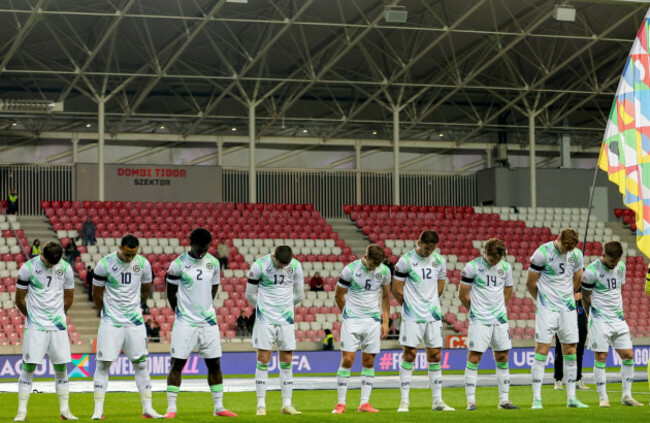
The men’s team voted on Saturday to proceed with the game, following hours of confusion and months of pressure by Stop the Game campaigners.
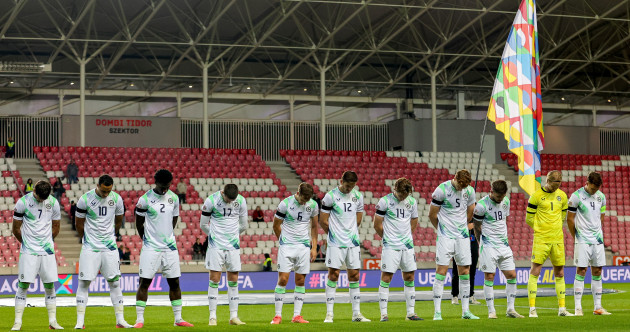
The players on the Ireland squad bowed their heads as the Israel national anthem was played before kick-off, and wore black armbands “in recognition of all the lives lost in the conflict”.
Cooke said: “We said all along that we would play the game. That was mandated through us by our members, through the board, and we’ve fulfilled one of the fixtures now thanks to the courage of those players who played tonight and togged out.”
The FAI president also praised Ireland manager Heimir Hallgrimsson: “The way he spoke yesterday in the face of some very antagonistic questions and the way he prepared the team.”
Cooke said the FAI is not clear what additional sanctions Uefa would impose if Ireland had not fulfilled the Nations League Fixture.
As well as standard punishments for not fulfilling a fixture, he said there was the possibility of “undetermined” extras.
“The rules are clear. It specifies if we don’t fulfil the fixtures what the sanctions are and then there’s reference to other sanctions undetermined,” he said.
Cooke said the extra sanctions “depends on Uefa and what sanctions they levy on somebody as a result of it.”
When asked if the organisation had threatened any added sanctions, Cooke said “no”.
Meanwhile, Hallgrímsson said that he thinks public opinion and protest go “a little too far” when it impacts the players and their families.
Speaking on RTÉ’s Morning Ireland this morning, Hallgrimsson said: “We’ve always respected people’s opinion and protest. We’ve never said anything against them. When it starts to affect the players that represent the country and their families, I think that’s a little too far, and we need to protect the players.”
“It’s been so difficult for so many players, and I hope that will not be in the next game because they have shown support to the protest,” he said.
Hallgrímsson also said he doesn’t “have enough vocabulary in English” to say how proud he is of the team.
He said that the build-up to the game was “the first time” there was a split amongst players around decisions. He added: “In the end, they decided to stick together and finish the game”.
“I think the damage for Irish football. If we hadn’t played, it could have been bad,” he said, adding that he heard it “could have damaged the Euros”.
“We played the game. We had a good performance. Let’s see how the next days span. Hopefully, people will support these players,” Hallgrimsson said.
Israel and Ireland are due to meet again for a Nations League fixture in Bačka Topola, Serbia on 4 October.

To embed this post, copy the code below on your site









have your say