We need your help now

Support from readers like you keeps The Journal open.

You are visiting us because we have something you value. Independent, unbiased news that tells the truth. Advertising revenue goes some way to support our mission, but this year it has not been enough.

If you've seen value in our reporting, please contribute what you can, so we can continue to produce accurate and meaningful journalism. For everyone who needs it.

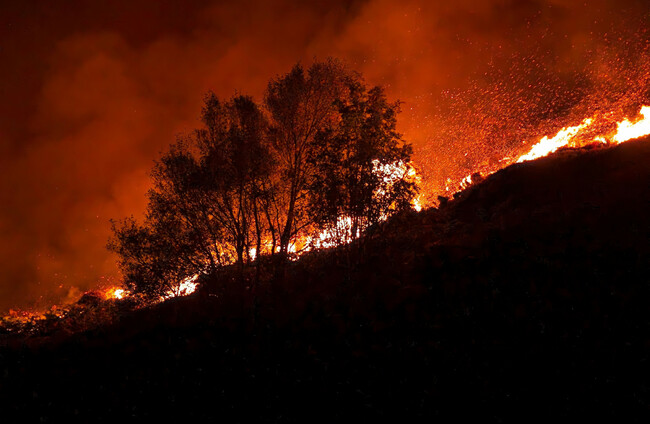
The report states that last year saw a record 154,000 deaths from pollution caused by wildfire smoke. Alamy Stock Photo

Over half a million people are dying every year due to rising heat globally

The report states that the rate of heat-related deaths has increased by 23% since the 1990s.

MORE THAN HALF a million people are dying around the world every year due to heat-related causes, according to a new report on the health impact of climate change. 

The Lancet’s annual countdown study found that the continued reliance on fossil fuels and the failure to tackle the growing crisis is resulting in millions of avoidable deaths yearly.

“Our continued reliance on fossil fuels is driving this global warming, and that warming is leading to huge negative impacts across health and well being. This includes really needless suffering and death,” Maria Walawender, the global research fellow with the Lancet Countdown, told RTÉ’s Morning Ireland. 

The report states that the rate of heat-related deaths has increased by 23% since the 1990s, to an average of 546,000 per year.

In the last four years, the average person has been exposed to 19 days of life-threatening heat. Of those, 16 days would not have happened without climate change. Babies and older adults are facing over 20 heatwave days per person, a fourfold increase over the last twenty years.

“We know that that heat is quite stressful for the body, and that’s true for anybody, but we know that specific groups, whether it’s infants or people over the age of 65 are particularly vulnerable because they have less efficiency in cooling themselves down,” Walawender said. 

“It can exacerbate cardiovascular disease, respiratory disease and other underlying conditions, and that stress on the body can lead to a variety of negative impacts, and of course, the most devastating of them being death.”

She said that over the last five years, the average person in Ireland saw about eight days per year “where the heat was quite dangerous”. 

Hotter and drier weather is increasing the risk of wildfires. Last year had a record 154,000 deaths from pollution caused by wildfire smoke.

The extreme heat and droughts is also affecting crop production, disruption supply chains and further threatening food security globally. The report states that 123 million more people endured food security worldwide in 2023 compared to 1981 to 2010.

The report also highlighted how an estimated 160,000 premature deaths were avoided every year between 2010 and 2022 due to a reduction in outdoor pollution caused by coal. 

But the continued reliance and investment in fossil fuels is threatening progress on tackling the climate crisis. 

Governments in 73 of the 87 countries reviewed by the report provided $956 billion in fossil fuel subsidies in 2023, down from the $1.4 trillion allocated the year before.

Lending to fossil fuel sector activities from private banks surged 29% to $ 611 billion in 2024, exceeding their green sector lending by 15%. “These fossil fuel investments threaten not only public health but also national economies,” the report states. 

The health impacts of climate change are also increasingly straining the economy. Heat exposure resulted in a record-high 639 billion potential work hours being lost in 2024, 98% above the 1990-99 average.

This resulted in potential losses worth $1.09 trillion, almost 1% of Global World Product. Weather-related extreme events in 2024 caused $ 304 billion in global economic losses, a 58.9% increase from the 2010-14 annual average. 

“Concrete and meaningful actions are urgently needed to protect the world’s populations from the climatic changes that have now become unavoidable, and to prevent an increase of climate change threats that exceeds possibilities of adaptation,” the report states. 

It states that high greenhouse gas-emitting countries and corporations “must urgently reduce their emissions to prevent climatic changes to exceed our capacity to adapt”.

Readers like you are keeping these stories free for everyone...
A mix of advertising and supporting contributions helps keep paywalls away from valuable information like this article. Over 5,000 readers like you have already stepped up and support us with a monthly payment or a once-off donation.

Close
JournalTv
News in 60 seconds