Sign in. It’s quick, free and it’s up to you.
An account is an optional way to support the work we do. Find out more.
Sign in. It’s quick, free and it’s up to you.
An account is an optional way to support the work we do. Find out more.
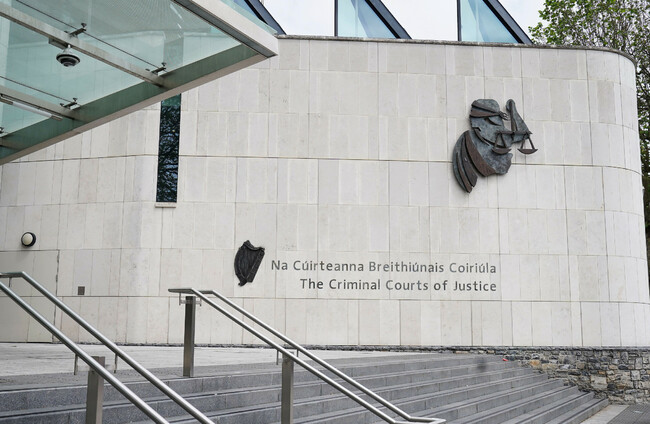
THE NUMBER OF legal aid certificates granted in July was down 93% on the same time last year, the Oireachtas Committee on Justice will hear this afternoon.
The Law Society, which represents solicitors, and the Bar of Ireland, which represents barristers, will both appear before the committee to discuss the new criminal legal aid scheme introduced by Minister for Justice Jim O’Callaghan on 1 July.
Solicitors are currently engaged in a strike over the new flat-fee payment model, which sees them receive a fee of €520 per legal aid client regardless of how many court appearances the case ends up consisting of or how many different charges are brought.
They are calling for O’Callaghan to backtrack on key elements of the model, which they say is not feasible and could leave them “working for free” on complex cases requiring many different appearances.
But O’Callaghan has insisted that early evidence suggested that the new scheme is achieving its objective of reducing the number of court appearances.
Law Society president Rosemarie Loftus will tell the committee that the new scheme’s “one-size-fits-all” approach is especially problematic because “it has no regard to the complexity of cases coming before the courts”.
“The scheme is based on a fundamental misunderstanding of how the District Court operates. It prioritises administrative efficiencies over fairness. It also replicates a flawed model that has already failed in civil legal aid,” she will say.
Loftus will also highlight the negative impact the row between solicitors and the minister is having on the courts service.
She will say that the number of legal aid certificates granted has collapsed from 10,277 in July 2025 to just 702 in July 2026.
“The scale of the reduction is reflected in courts across the country. A fall of this scale is deeply worrying in itself,” she will say.
The committee will hear that the two outstanding issues for solicitors are separate and distinct criminal cases being treated as a single matter where they happen to come before the court on the same day, and the absence of any practical mechanism to address cases of extended duration involving exceptionally high numbers of court appearances.
The Law Society will say that it remains committed to finding a workable solution to the outstanding issues and is available to meet O’Callaghan “at any time”.
Loftus will add that it does not accept O’Callaghan’s view that it would be inappropriate to meet in advance of a judicial review judgment on the matter, which is due next month.
She will say that the commencement of the new legal term in October traditionally results in a high volume of trials being listed, especially long-running cases that exceed four weeks.
“The availability of legal representation will be essential for these trials. Every day that passes sees people denied meaningful access to justice.”
Meanwhile, the Bar of Ireland will tell the committee that the criminal justice system, including trials and sentence hearings, has been “significantly impacted, and a backlog is accumulating”.
“For victims, delay prolongs uncertainty and distress. For accused persons, it postpones the determination of fundamental rights. For the public, it weakens confidence that justice can be delivered promptly and fairly.”
It will say that Dublin is identified as a “particular challenge” amid the growing backlog of cases.
“This is significant given the volume of cases that ordinarily are heard in Dublin’s criminal courts. The practical test is whether suitably experienced practitioners are available, throughout the State, to progress cases of every level of complexity.”
It will say that “inadequate and static remuneration, combined with increasingly complex work” has driven experienced practitioners from the new scheme and contributed to unacceptable waiting times for those seeking access to legal advice, including for child access and domestic violence.
“We must not reproduce that failure into the criminal justice scheme and act only after capacity has been lost.”
The Bar of Ireland will urge O’Callaghan to urgently engage with solicitors on the issue.
“The priority now must be resolution of the dispute, so that victims, accused persons and the public have access to a well-functioning and sustainable criminal justice system now and into the future.”

To embed this post, copy the code below on your site














have your say