Sign in. It’s quick, free and it’s up to you.
An account is an optional way to support the work we do. Find out more.
Sign in. It’s quick, free and it’s up to you.
An account is an optional way to support the work we do. Find out more.
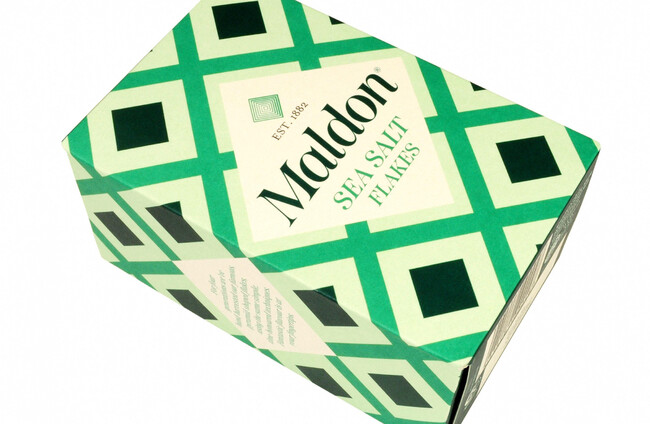
MALDON, THE BRAND behind that posh-looking box of British salt in the supermarket, uses imported German rock salt to make its sea salt flakes, an investigation has found.
The brand is known for its pyramid-shaped flakes and a claimed history of salt-making on the Essex coast of England stretching back more than 140 years.
But The Observer found that mined rock salt is added to seawater at its production site near Goldhanger in Essex, raising questions about how the product’s origins are presented to shoppers.
A 250g box is currently listed online at €4.65 in Tesco Ireland and Dunnes Stores, while the same product is listed at €4.70 in SuperValu.
The British newspaper reported that four lorries delivered around 12 tonnes of salt each over two days during its monitoring of the factory. Bags carried the branding of German salt producer K+S.
The rock salt is mixed with water from the Blackwater Estuary in a process known as “salt-on-salt”. Adding salt makes a stronger brine, reducing the energy needed to evaporate the water and produce crystals.
The imported salt dissolves in the seawater and forms part of the finished product, according to the investigation.
Revealed: how Maldon sea flakes are made using imported German rock salt An investigation has found that tonnes of mined rock salt are being poured into the production line of one of Britain’s most popular artisanal brands ✍️ @JonUngoedThomas https://t.co/zFjDxiC4Uv
— The Observer (@ObserverUK) November 15, 2026
Maldon updated its website after being approached by The Observer.
Its website now describes a “long-established salt-on-salt process”, using what it calls “natural ancient sea salt” to enrich the seawater with minerals.
The company told the newspaper that its methods date back more than a century and that it has never sought to conceal them. It maintains that its description of the product as sea salt flakes is accurate, arguing that rock salt originated in prehistoric seas.
Residents who documented deliveries to the factory said that shoppers should be given clearer information about what goes into the box.
Essex trading standards and the UK’s Food Standards Agency reportedly examined the production process in 2019 and 2020, with no further action taken.
Trading standards stated there were no specific legal parameters for determining whether the description “sea salt” was accurate.
Maldon said its production methods were known to the relevant authorities and its products complied with applicable food and labelling requirements.
A spokesperson for Maldon said: “Maldon is a heritage brand and the custodian of the ancient craft of salt making for 144 years.
Our artisan salt-on-salt production techniques are part of that heritage.
Rock salt is ancient sea salt, from evaporated prehistoric seas. The ancient sea salt minerals dissolve into the sea water at Maldon, creating a brine. The brine is heated in open salt pans, and the evaporation process creates 100% Maldon sea salt flakes.”

To embed this post, copy the code below on your site













have your say