Sign in. It’s quick, free and it’s up to you.
An account is an optional way to support the work we do. Find out more.
Sign in. It’s quick, free and it’s up to you.
An account is an optional way to support the work we do. Find out more.
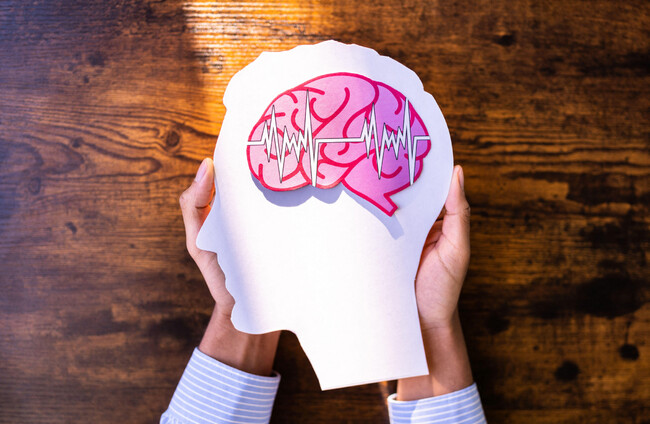

FOR THE MAJORITY of my life, my understanding of epilepsy was shaped by my media consumption.
The first on-screen depictions of seizures and epilepsy that I witnessed were in the Simpsons episode where they visit Japan, David Platt’s epilepsy diagnosis in Coronation Street and the drama that the condition fuelled to drive the plots on medical shows like Grey’s Anatomy.
Earlier this year, I was diagnosed with the condition and realised that there are many misconceptions about epilepsy, largely due to the simplistic framing of the condition in film and television. The depiction is likely limited and sensationalised because absence seizures (brief lapses of consciousness) don’t make for very exciting TV.
Off-screen, there are some basics regarding epilepsy that most of us know: Firstly, driving is not allowed until you have gone a year without a seizure and received sign-off from your doctor. This can be very disappointing and alienating for people who rely on driving for work, socialising and day-to-day tasks like getting groceries.
It wasn’t until I was diagnosed that I realised the extent of how limiting the driving ban is, but it was also then that I learned of the fantastic work that Epilepsy Ireland has undertaken to campaign for people who experience seizures.
As a result of Epilepsy Ireland’s work, the Free Travel Scheme was decoupled from Disability Allowance and Invalidity Pension, providing free public transport to people who cannot drive as a result of an epilepsy diagnosis. It was an important step to alleviate one of the most challenging aspects of the condition, supporting the continuation of employment and socialising (to the extent that public transport can help).
There were plenty of things that I learned from being diagnosed with epilepsy. Another surprise was that I cannot give blood, as you need to be three years seizure-free without taking medication in order to donate blood. This restriction was baffling to me, before I learned that the process can trigger seizures.
So I cannot drive, and I certainly cannot attend a blood drive.
Beyond the practical stuff, I realised that there’s a major lack of education regarding epilepsy.
Most people do not realise that there are more than 30 types of seizures, again, because media depictions are so limited. Because of how little I knew about epilepsy, I was incredibly reluctant to present myself at A&E with an overwhelming sense of déjà vu, which is a very common sign of temporal lobe epilepsy. I had to be dragged there, refusing to go until I got the stern advice of my brilliant pharmacist.
To my surprise, the doctors I dealt with were immediately alarmed and took my symptoms very seriously. Those symptoms are a sign of focal aware seizures, where the individual retains awareness of what’s going on around them. If you experience extreme déjà vu followed by confusion and short-term memory loss, don’t write it off as a weird afternoon. These are some of the lesser-known symptoms of seizures and seizure auras (which can precede a larger seizure).
In contrast, there are also focal impaired seizures, where you feel confused and lose track of what’s going on around you. Then, there are focal motor seizures, which impact your movement and can present as twitches or repetitive behaviours. The “classic” seizure we think of when we think of epilepsy is called a tonic-clonic seizure, which involves loss of consciousness, convulsing or jerking.
Many of these different types of seizures are followed by some additional symptoms, like memory loss or exhaustion – which alone can be difficult to deal with.
Perhaps as a result of (very necessary) seizure warnings on TV, in video games, and across media, there also seems to be a misconception that the biggest seizure trigger is flashing lights.
In reality, about 3% of people with epilepsy are triggered by flashing lights; however, that doesn’t mean that we should do away with these warnings. If anything, we could do with more warnings, as endless social media video feeds can present a minefield for people, where warnings are rarely included.
Personally, the most jarring aspect of the experience has been the memory loss. It’s quite unsettling to be told you have repeated yourself multiple times, without realising until it’s pointed out to you.
It’s a bizarre sensation, where it’s not as though you’ve forgotten that you’ve said something. Instead, there’s a complete lack of information in your brain that suggests that you have expressed a thought. Each thought feels brand new.
Similarly, I encounter people I’ve met before who I simply cannot place. It’s embarrassing because it makes me feel extremely rude. It’s not that I have forgotten people, but again, rather that the information has just been dumped from my mental database. For some, medications can exacerbate the issues with memory. I suppose the only small upside is that I can enjoy a re-watch of a TV show that I’ve allegedly already seen.
In all seriousness, memory loss has a profound impact on the mood and mental health of people experiencing this symptom. Epilepsy is a condition that has really significant social, mental and physical implications for people who experience it. There seems to be an idea that it’s easily treated and that medication solves everything nowadays.
In reality, drug-resistant epilepsy impacts one-third of adults with epilepsy, who continue to have seizures despite treatment. It can be a debilitating condition that upends your quality of life.
Outside of how it impacts your health, it comes with intense anxiety and shame for many people who experience it. It prevents people from fully participating in the world, holding people back from attending events or going about their daily life, for fear that a seizure will occur at an inopportune time.
People don’t always look upon the condition with empathy. I’ve read horror stories from people who have had their phones and engagement rings stolen during seizures. I’ve heard of people being hassled for using accessible toilets, when traditional bathroom cubicles sometimes present unnecessary hazards.
Everybody’s experience of the condition is different, so this doesn’t even begin to scratch the surface of what epilepsy entails, but my main takeaway is that everybody could do with knowing more about the condition.
All of us should know what to do if someone does experience a seizure.
Kelly Earley is a writer and podcaster from Coolock, who has a deep interest in culture, technology, community and social justice. She writes for The Journal every week.
To embed this post, copy the code below on your site













have your say