Sign in. It’s quick, free and it’s up to you.
An account is an optional way to support the work we do. Find out more.
Sign in. It’s quick, free and it’s up to you.
An account is an optional way to support the work we do. Find out more.

LAST UPDATE | 12 hrs ago
Waterford scientist Professor John Nolan is the subject of a new documentary, A Vision for Vision. His decades-long research into eye health has taken him around the world and uncovered the connection between the eye and the brain, and the impact of nutrition on both. Along the way, his work has led to a bigger question: What can our eyes tell us about how we age?
AROUND 25 YEARS ago, I started a PhD at Waterford Institute of Technology in Ireland, entitled “Determinants of Macular Pigment in Healthy Subjects”.
I don’t expect you to know what this title is about, but fast-forward until today, and I can tell you that it is important. Why? Because the study of macular pigment has shown us how what we learn about the eye can tell us important things about the brain.
Let’s start at the very beginning.
Your eyes: I like to describe the eye like a camera. The front of the eye has a lens (the same as in a camera), and the back of the eye has a specialised tissue called the retina (comparable to the film in a camera).
The middle part of the eye contains a jelly-like substance called the vitreous. This is also very important and can be compared to the space inside a camera between the lens and the film. The retina is where things get really interesting.
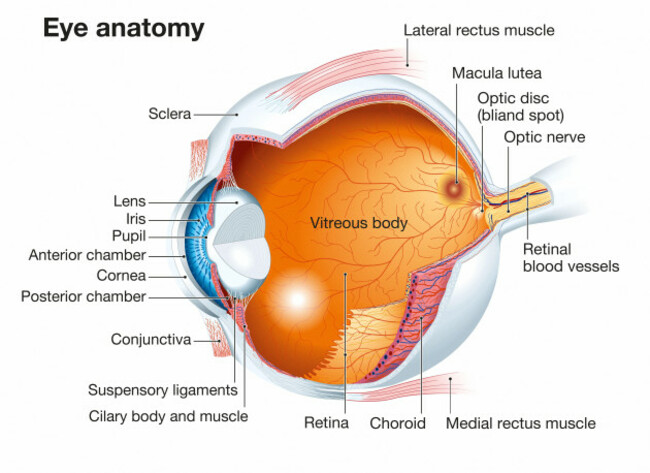
At the very centre of the retina we have an area called the macula. This is tiny, just 4mm, but is responsible for our detailed central vision and plays a critical role in our colour vision.
Our goal is to keep this tissue healthy throughout our life and into old age. In other words, to keep the film of the camera working. But this is difficult. Why? Because the retina is extremely busy working to give us vision, and it needs a lot of oxygen to do so.
We call this oxygen metabolism, and one consequence is oxidative stress at the retina, where free radicals can damage the cells we need for vision. This is why the retina has its own antioxidant defence systems to help protect these important cells. When these protective systems are overwhelmed, oxidative damage can contribute to degeneration of the retina.
One of the most important diseases affecting the macula as we get older is age-related macular degeneration, or AMD; a disease of the macula that results in a loss of central vision.
Your pigment – eye nutrition: To explain this, I first need to explain what carotenoids are. Carotenoids are naturally occurring pigments responsible for much of the colour that surrounds us. Over 700 carotenoids exist in nature, giving colour to plants, fruits and vegetables, as well as contributing to the colour seen in fish and bird feathers.
In the past, carotenoids have been widely used for their colour in both the food and textile industries. However, research over recent decades has also demonstrated the important role that certain carotenoids can play in human eye and brain health.
A typical Western diet contains many different carotenoids, but only a relatively small number are found in our bloodstream. As humans, we cannot produce carotenoids ourselves; we must obtain them through our diet from foods such as leafy green vegetables, corn and eggs.
Of all the carotenoids found in nature, just three are selectively concentrated at the macula: lutein, zeaxanthin and meso-zeaxanthin. Together, they form what we call macular pigment.

This pigment is important because these carotenoids act as antioxidants at the macula and also filter potentially damaging short-wavelength blue light. Meso-zeaxanthin is particularly interesting because it is concentrated at the very centre of the macula and is the strongest antioxidant.
My PhD discovered that people at risk of AMD were deficient in macular pigment. It now makes sense, but this was only the start. Increasing macular pigment improves vision in healthy eyes but also for patients with early-stage AMD.
Your eye pigment: A window to the brain. Why? Because your macular pigment can tell us something about the levels of these important nutrients in the brain. We call this a correlation, and importantly, macular pigment can be measured while you are alive. In other words, we don’t need to dissect your brain to see if you have high or low levels of these carotenoids. We can simply measure the pigment in the macula of your eye.
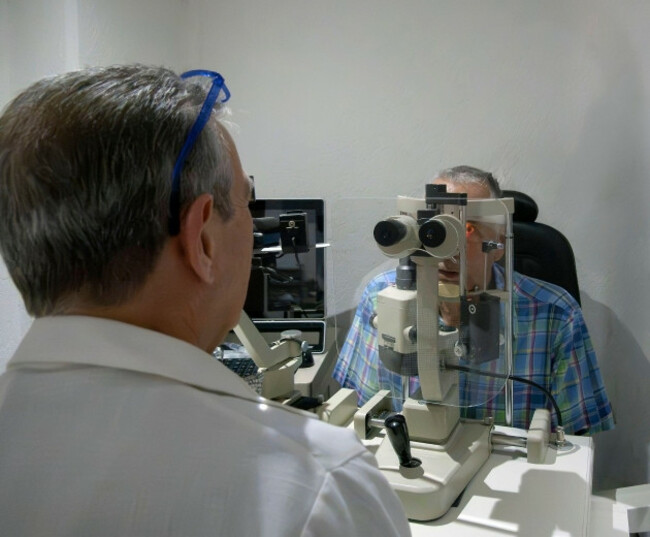
What we found along the way was fascinating. In one study of over 5,000 Irish people aged 50 years and older, we found that people with higher macular pigment levels had significantly better cognitive abilities (brain function). Following this, we investigated whether increasing these carotenoid pigments through supplementation could improve cognitive function.
Our studies reported improvements in aspects of cognitive function in healthy participants and in patients with mild cognitive impairment (MCI), a condition associated with an increased risk of developing Alzheimer’s disease and other dementias. We were also the first to report that patients with established Alzheimer’s disease had significantly lower levels of macular pigment, alongside poorer visual function.
So now it starts to come together. The eye is giving us information about the brain. Nutrition and supplementation can modify macular pigment, and macular pigment can be measured directly in the living eye. But for the brain, another important piece of the nutritional puzzle is needed: omega-3 fatty acids. Why? Because omega-3 fatty acids, particularly DHA, are important structural components of the brain and retina.
We tested this in our ReMIND trial, where we combined the macular carotenoids lutein, zeaxanthin and meso-zeaxanthin with omega-3 fatty acids in patients with mild to moderate Alzheimer’s disease. The results were very positive.
We found that enriching the body with these important nutrients resulted in improvements in patients’ quality of life, as seen by primary carers’ reported improvement in mood and memory for patients on the active supplement.
For me, this brought another piece of the puzzle together. We started by studying a pigment in the eye, and 25 years later, that research has taken us from the retina to the brain and to a much bigger question: Can what we learn from the eye help us protect the brain as we age?; I think so.
To learn more about this topic, I invite you to visit my website, profjohnnolan.com, where you will find our published scientific papers supporting the research discussed above. You can also visit avisionforvision.com to learn about our new documentary, A Vision for Vision, which tells this story in a very different way, bringing the science, the scientists and, most importantly, the people behind the research to life.
Professor John Nolan is the founder and director of the Nutrition Research Centre Ireland (NRCI).
To embed this post, copy the code below on your site















have your say