Sign in. It’s quick, free and it’s up to you.
An account is an optional way to support the work we do. Find out more.
Sign in. It’s quick, free and it’s up to you.
An account is an optional way to support the work we do. Find out more.

YOU MAY HAVE heard the line “If you don’t get politics, politics will get you.” It is often a hard-learned lesson.
Ed Sheeran is learning it. RTÉ is trying to navigate it. And the Football Association of Ireland (FAI) is still struggling with it. They all have one thing in common: they thought they could stay away from politics.
Eventually, it catches up. RTÉ has taken a “safety in numbers” approach, but in some ways that only highlights the problems still to come.
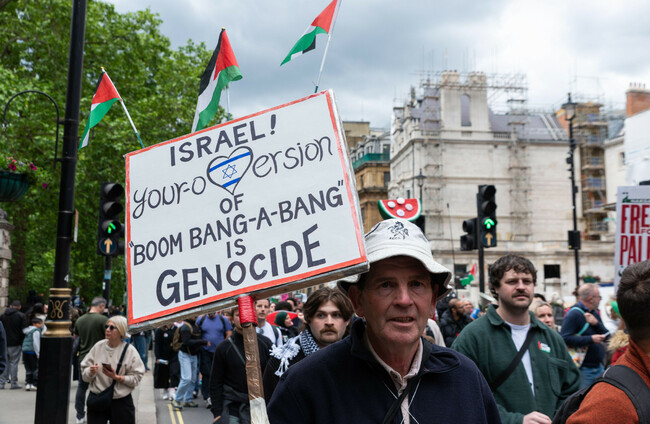
Let’s step back a little. Rapper Macklemore was supporting Ed Sheeran in the United States and made a strong statement about Gaza and Palestine. This resulted in US billionaire Robert Kraft saying further shows would not be allowed at his venue.
The promoter capitulated and removed Macklemore. Other artists, including Irish bands, pulled out as a result. Ed Sheeran, fearing the whole tour would collapse and people would not get paid, tried for a compromise, could not find one, and then, in an effort to be non-political, became the political story of the week.
Anyone who grew up in the punk era could have told him: music is always political. An artist is always in conversation. An audience always has a right of reply. If they do not like what an artist says, they need not show up, or they can boo. No matter how you dress it up, once a venue owner refuses to allow an artist to play, they are taking a political position themselves, rather than letting people decide.
That fallout has continued on this side of the Atlantic. Classic Hits FM announced that it was removing Ed Sheeran from its playlists. To some, that might seem like more silencing. It is not.
Classic Hits was responding to its listeners and to a fear that they were going to tune out, which the station cannot afford. It also needs to keep Irish musicians onside. Therefore, its stance was more in keeping with audience desires than with taking a political position of its own. In doing so, it probably read the politics well and got it right.
RTÉ did not have to make a statement on Eurovision today. Spain has asked for more time. But never waste a good crisis. With Irish artists annoyed by the events in the United States, and with other radio stations clearly siding with strong public opinion, it was a good day for RTÉ to announce it was not taking part in Eurovision again.
This meant the story was not a focus on RTÉ, but rather followed a pattern already in line with the public mood. The broadcaster simply said nothing had changed, so it would not compete.
Of course, the issue on Eurovision is no longer whether Ireland was going to compete. It is on what grounds it will ever compete again. Nothing in the Middle East is going to be sorted to everyone’s satisfaction anytime soon. RTÉ has lost the long-held position that it is broadcasters, not countries, that enter. It must now remain the judge of which, among all Eurovision entrants, is right or wrong, and of what constitutes things being “over”.
That is a longer issue, and one that RTÉ will not lose too much sleep over. There are more than a few in its halls who would not be bothered if Ireland never competed again.
The bigger problem is that you could be forgiven for thinking Eurovision was much more important than football. Not far away, the Ireland football manager was describing how none of the Irish squad is comfortable with their upcoming fixtures against Israel.
Fixtures the FAI is determined to compete in, despite opposition campaigns. RTÉ is, of course, going to broadcast those fixtures because of contractual obligations. So is it the case that boycotts only happen if they do not hurt too much? Is this a principled position because of what is happening, or a convenient way to avoid heat?
The position on Eurovision is relatively easy. It does not have the same fan base. It will not lead to serious financial hits. And most people will say, “Sure, we never win anyway.”
Football is different. We might not win, but we might qualify. The FAI is certainly not willing to accept a loss of the games as a result. It will stand behind the fact that Israel, too, is entitled to free speech, and that the association will not sit in judgment. In doing so, it ties RTÉ into a real double standard.
It was a good day for RTÉ to get the news out and to show that Irish music is pretty united in its stance. It is going to face trickier moments in the weeks to come, though, as a far more important and controversial broadcast of the football happens.
Standing up for things is easy when you do not lose too much. It is hard when you have to be consistent and apply the same moral standard all the time. Musicians have shown they are willing to take a hit for something they believe. That should be admired.
What will be demanded is the same honesty from everyone else as to whether this is a true position or a convenient escape.
Johnny Fallon is a political commentator, director of Carr Communications and author of ‘Party Time: Growing up in Politics’.
To embed this post, copy the code below on your site











have your say