Sign in. It’s quick, free and it’s up to you.
An account is an optional way to support the work we do. Find out more.
Sign in. It’s quick, free and it’s up to you.
An account is an optional way to support the work we do. Find out more.


LAST UPDATE | 9 hrs ago
THE HSE DRUGS Group’s recommendation to refuse reimbursement for the drug Skyclarys is a stark reminder of the devastating human cost that can lie behind bureaucratic decisions.
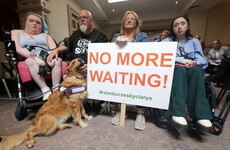
Patients with Friedreich’s ataxia live with a relentlessly progressive neurological condition, in which time matters. Yet patients and families have been waiting more than two years for a decision on omaveloxolone (Skyclarys), made by drug giant Biogen, with each stage of the process bringing fresh hope, followed by further uncertainty.
The final decision rests with the HSE senior management team, due to meet on the question next week.
The layers of assessment that lead to a decision on a new medication have grown exponentially over the last decade. The protracted process now has at least seven stages to the reimbursement application, from initial drug company submission to a decision on whether the drug will be paid for by the taxpayer. New specialist medications are often eye-wateringly expensive, and much of the extended application is focused on commercial negotiations on price.
The public and politicians seem less supportive of these labyrinthine stages, aside from any negative decision, which will inevitably cause distress to patients and their families.
The early stages of the process involve duplication of assessments already carried out in other European countries, such as the rapid review and the health technology assessment.
No one is suggesting that we should skip important evaluations, but when a drug has already been assessed in another member state of the EU, there may be scope to utilise that assessment. We already rely on jurisdiction-wide regulation of medicines and medical devices, meaning that safety, clinical models and cost efficiency data are available. Countries that have approved a novel medication could share their budget impact studies.
Multiple steps mean a significant length of time before patients find out if they can access the drug. They may be able to source it privately, depending on the medicine and the distributor, but at €280k per year for Skyclarys, this isn’t a realistic prospect.
Evaluation reports are considered at different time points by a committee of well-intentioned experts drawn from various stakeholders, who meet a couple of times a year. This relatively inefficient framework extends the waiting period and recently drove Emily Felix to seek leave from the High Court to bring a judicial review of the decision-making process around Skyclarys.
Unlike our justice system, none of the decision-making steps in relation to drugs like this is heard in public. Minutes of meetings and reports may eventually be published, but the detail in these varies enormously, and there may be a delay of months before publication.
Fair access to healthcare and life-sustaining treatments is a justice and human rights issue, like access to the courts and restriction of liberty. A major change in the visibility of data and the transparency of decision-making is necessary to build trust in the processes that significantly limit a person’s health outcome.
In combination with a shift towards greater openness and access to information, greater clarity on decision accountability is also needed. The public have grown suspicious of choices being made on their behalf by unelected professionals who remain in the shadows. When accountability is sought, such as the Leinster House bike shed fiasco, no one is responsible. Ultimately, the Minister for Health is the only person in this reimbursement process who is accountable to the public.
Finally, decisions about how State funds are spent on medicines must reflect our shared priorities as a society. We rightly expect our taxes to be spent wisely, with resources directed where they can achieve the greatest benefit and waste avoided. Value for money is important. But what does ‘value’ mean when what is being measured is not simply the cost of a medicine, but the value of preserving life?
In my experience in intensive care, the priority for people is quality time with those that they love. When people know they don’t have much time left, possessions and status fall away.
In her book, ‘Top Five Regrets of the Dying,’ Bronnie Ware, a palliative care nurse, highlights how dying patients speak about working less and spending more time with family and friends. The current arduous drug reimbursement process does include a quality-of-life measurement and lived experience from patients and families, but there is little insight into how this ‘value’ is weighted in the final decision.
We can expect many more applications for similar medicines as precision medicine advances, allowing treatments to target the specific genetic defects that cause rare diseases.
The public understands that State finances and healthcare resources are finite. But we need a mature and inclusive conversation about how healthcare should be rationed fairly, and what values should guide those difficult decisions.
There may be no perfect answer to these ethical questions. But giving people more time with the people they love seems like a good place to start.
Dr Suzanne Crowe, is a consultant in paediatric intensive care.
To embed this post, copy the code below on your site














have your say