Sign in. It’s quick, free and it’s up to you.
An account is an optional way to support the work we do. Find out more.
Sign in. It’s quick, free and it’s up to you.
An account is an optional way to support the work we do. Find out more.
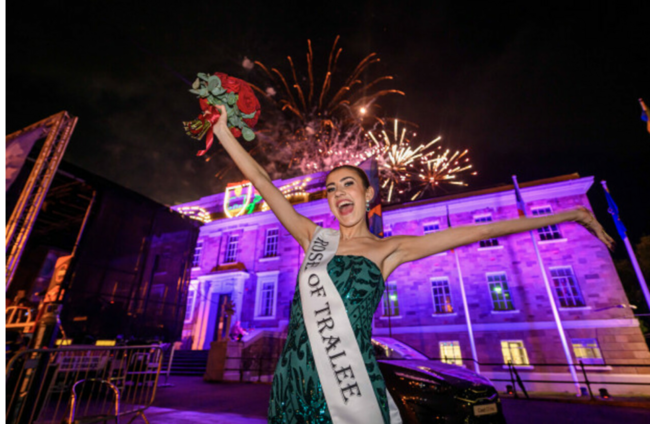
THE ANNUAL ROSE of Tralee selection is nearly here, with 32 roses set to take to the stage on Monday and Tuesday night to battle it out for the title.
The winner will be crowned International Rose of Tralee for 2026 and represent the festival around the world.
But how is the competition judged, and can we predict who is going to take the crown?
Here’s everything you need to know ahead of the big event.
The panel is typically made up of four judges of different backgrounds. This includes a former rose, a television personality, a figure from the fashion world and a community or civil representative.
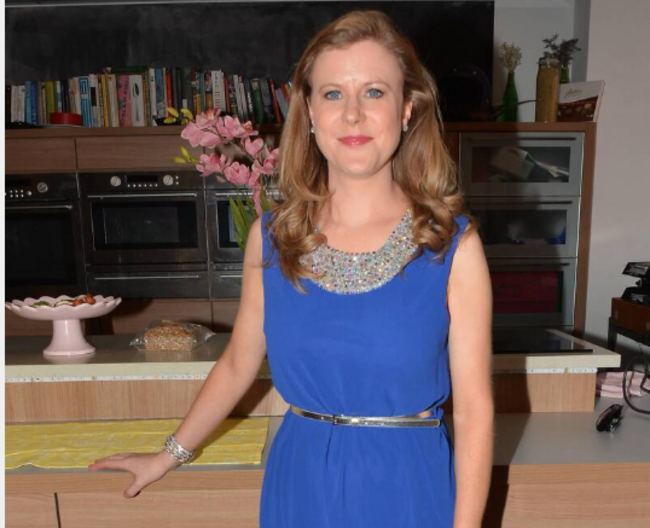
This year’s judging panel consists of RTÉ broadcaster Nuala Carey, fashion designer Don O’Neill, Aisling Murphy of sponsor Murphy Homes and 1974 Rose of Tralee Maggie Flaherty.
Steve Cronly, the festival’s director of operations, told The Journal that judges chosen are always “friends of the festival” and have been involved in some capacity for many years.
In selecting the judges, he maintained that “we want to ensure the festival is in a safe place”.
Viewers at home may think that the winner is chosen solely based on what’s seen during their appearance on the live TV show, but this is not the case.
In fact, much of the judging takes place away from the cameras.
The judges are first introduced to the roses on the Friday before the live broadcast, and an initial observation takes place.
On Saturday, the judging begins in earnest, with each rose getting to spend 15 minutes individually with the panel.
That afternoon, there is a parade which allows the judges to observe the roses within a social setting and examine how they interact with members of the public.
Sunday is known as the group judging day when the roses are broken up into smaller groups and quizzed on current topics of interest.
Cronly gave some examples: “How’s social media improved our lives? Do you think it’s a good or bad thing in today’s society? And what is fake news? How can we determine between what’s real and what’s not?”
He described Monday ahead of the competition as “eye-opener” as the roses take to the stage to rehearse before the first show that evening.
“That’s when the nerves really hit the roses. And the judges will just casually come up and take a seat in the back of the room and have a look how the rehearsals are going, and that actually tells them a lot, also,” he said.
Asked if the process allows the judges to know each rose fully, Cronly admitted: “Would we love to give them more time with the Roses? We would. Unfortunately, time doesn’t allow it.”
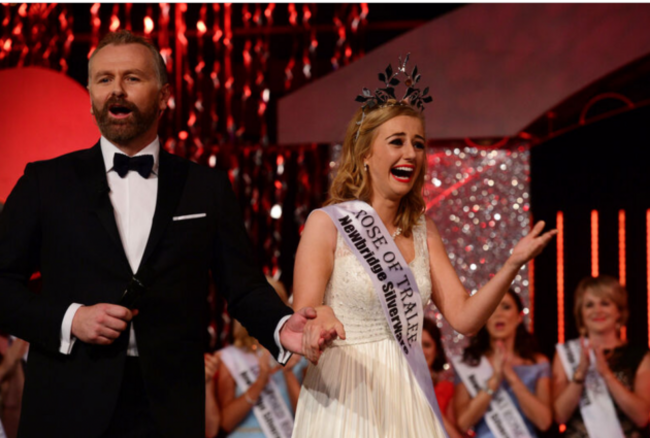
Ahead of the competition, Cronly sits down with the judges and gives them a brief of what to look for.
Primarily, the winning rose needs to be a strong global ambassador for the festival.
“She should be capable, confident, intelligent and informed with ambition and positivity. Not every Rose has all of those, but a lot of them will have some, some will have more than others,” Cronly noted.
He remarked that the judging is largely subjective but “they need to be sure before they sign off on the envelope that this girl has the empathy, the patience, the social awareness, and is media savvy”.
Former judge and host Dáithí Ó Sé told The Journal that the judging experience was strange.
“When you’re judging something you’re almost always looking for faults but in this it’s totally different,” he said.
“It’s just those little things that might happen in an interview when they’re talking, that might catch somebody’s eye, a judge’s eye, just that little flare that’ll go up. That’s really the difference, and the margins are tiny,” he added.
Ó Sé admitted that some years it comes down to the wire and the winner is not chosen until moments before the envelope is opened.
“As a judge, you stand back watching the show and say that’s really interesting. But then there’s a realisation coming towards the end of the Tuesday, we have to pick one. So that’s hard.”
He recalled one memorable moment when he was last on the judging panel in 2009.
“The band was coming on, and we still hadn’t the Rose of Tralee picked and it was down to two people, and there was five of us there and I was the person who had to say, Lads, we have to pull the trigger on this.”
Because so little of the decision is based on the live show, the winning rose always comes as a shock to viewers.
“You might have a girl who could be the best singer or a girl who dances very well. That doesn’t necessarily mean that she will become the Rose of Tralee. It’s not the X Factor
“While it adds to the occasion, and it gives the viewers at home a great show to sit down and relax for a few hours, the judges are on a completely different wavelength,” Cronly believed.
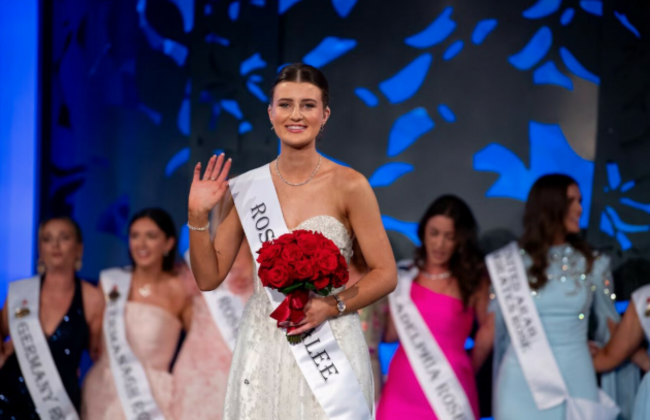
The chosen Rose routinely catches festival organisers by surprise also, though Cronly recalled the most recent two winners as highly welcome selections.
Last year, 20-year-old Laois rose Katelyn Cummins took the title.
The year before New Zealand rose, Keely O’Grady brought home the crown at the age of 21.
“The judges are trusting these 20 and 21-year-olds to represent the festival and be an ambassador with all the attributes we’ve given them. And in fairness to them, I have to say they are incredible”.
Cummins has attended over 270 events since she was crowned rose and even had time to win this year’s Dancing with the Stars.
The Rose of Tralee airs on RTÉ One and RTÉ Player, Monday 17 August and Tuesday 18 August from 8pm
To embed this post, copy the code below on your site












have your say