Sign in. It’s quick, free and it’s up to you.
An account is an optional way to support the work we do. Find out more.
Sign in. It’s quick, free and it’s up to you.
An account is an optional way to support the work we do. Find out more.
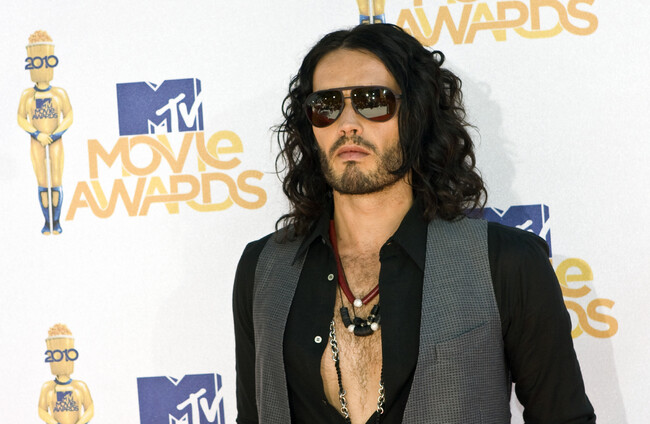

THERE’S A CERTAIN sense of weariness that I know I share with the vast majority of millennials right now, particularly women.
As we see the headlines about Russell Brand being found guilty of rape and multiple sexual assaults, we wonder: how many more men of his ilk will see justice?
And how could we have lived through an era where this happened at all?
There’s an unease that settles in the gut when those of us who followed Brand’s early career consider what was right in front of us all along.
In the early 2000s, Brand billed himself as an edgy, over-sexualised comic who was carrying on the grand tradition of famous men seeing women as conquests rather than actual people.
So far, so unsurprising.
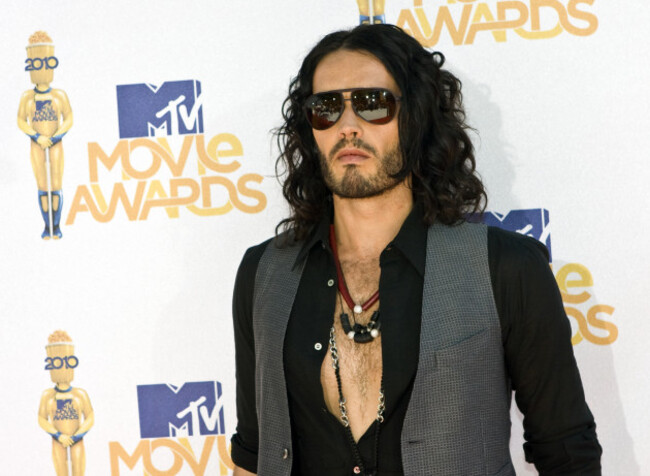
But with Brand there was a twist to the tale, because he served his manic hypersexuality and loquacious grandeur with a side of vulnerability.
He had a difficult childhood and a bad relationship with his father. He was open about his heroin addiction and his eating disorder.
It might be hard to accept now, but he actually felt to some degree – and not always, but certainly for much of the early 2000s – like a somewhat progressive, counter-culture-leaning public figure.
Not many high-profile men at that time were talking about their mental health and addiction issues the way he was.
Sure he bragged, pretty much non-stop, about his conquests in his standup routines and on chat shows – but the tales were told with a knowing wink. He was working towards being a better version of himself… or so he wanted us to believe.
In addition, he seemed, as 2000s parlance would have it, ‘in touch with his feminine side’ in an era where a man who used moisturiser was labelled ‘metrosexual’.
These days the wider culture, thankfully, espouses a broader idea of gender, but this was a strange and reductive period for masculinity.
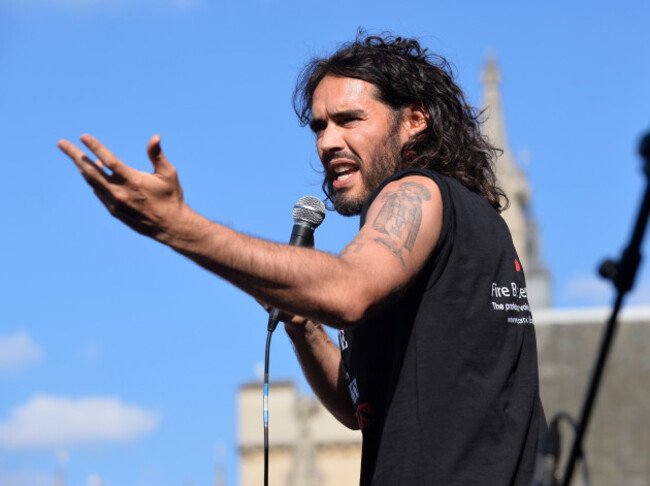
Brand seemed to be pushing against the boundaries for what a male star at that time could be. He had a somewhat androgynous, eccentric style, and was willing to put up with narrow-minded taunts about his appearance on chat shows.
Wearing tight trousers and a slick of eyeliner doesn’t make a person a feminist. But for a little while, Brand appealed to all genders because he seemed somewhat alternative and boundary-pushing, and he accepted he was flawed. He wanted to be a better man, but he also knew how to have a bit of craic. And he loved women. Didn’t he?
Brand was able to grow his fame because he appeared to be wildly different to the typical suit-wearing macho comic. He appeared to view himself as both the Messiah and the naughty boy.
But things soon soured. Over the past 10 years you’d find it hard to locate someone who’d publicly admit to being a Brand fan.
That’s because as he leapt from the UK to Hollywood and zinged around making films, his behaviour grew ever more outrageous. Then he got lost in the dark vortex that is fame, and Brand started to look less like a funnyman and more like the butt of the joke.
By the depths of the pandemic, he had become fully absorbed in the world of conspiracies, sucking in fans on YouTube with bombastic videos about the ‘great reset’.
And how ironic that, as the claims about him emerged in a 2023 joint investigation by The Times, The Sunday Times and Channel 4′s documentary series Dispatches, he found Jesus.
He was baptised in the Thames by Bear Grylls, a scenario even the most talented comic couldn’t make up. He and his wife Laura spent the last few weeks of the trial making live videos of them reading the Bible together in their pyjamas on Sundays.
All you can do to that sort of hubristic behaviour is laugh.
But it’s not funny, is it? All of this feels galling, sickening, and so inevitable. Looking back, we were fooled for a time into thinking Brand was something he wasn’t. And even when he told us who he was – he certainly didn’t hold back from making gross comments about women in public – he stayed in a position of power until relatively recently.
Even when the mainstream turned its back on him, Brand was able to leverage social media and YouTube to grow a whole new audience who accepted his conspiracy-laden shtick.
This sorry tale reminds us that the combustive combination of fame plus a toxic form of masculine ego results in women’s bodies being the collateral damage.
So why was Brand able to behave how he did for so long? Because a famous man still wields a noxious sort of power. There is still a celebrity hierarchy, and men are still at the top of it. There is a long history of women being positioned as the muses and groupies of male creatives, their own work either ignored or diminished. Ask women like Yoko Ono, Courtney Love or Lee Krasner about that.
Unlike women or minorities, white men in the public eye typically do not have to be perfect. They do not have to look perfect, or act perfectly.
Brand was forgiven for some of his outré behaviour because of the sides of him that offered something different to the norm. He was a self-confessed bad boy. He was edgy, and comedians are afforded more leeway to be edgy. He was entertaining. He was a flirty, well-spoken cheeky chappy who swung between self-deprecating and self-aggrandising statements.
His job was to push buttons. And so, when he went too far, for a long time the self-described “Dickensian gent, or S&M Willy Wonka” was easily forgiven.
In showbiz, a man with a huge following will be forgiven for a lot of things. But that meant that behind the scenes, Brand’s behaviour became ever more egregious.
And how easy is it to speak out about a famous man who is known for being edgy and a button-pusher?
Things may have moved on to the point where we can call out such toxic masculinity, and where Irish women like Joanne McNally and CMAT are near the top of the entertainment apex. But they are still in the minority. Plus, the idea of there being value in being desired by a famous man is still present, and allows men like Brand to take advantage of the adoration.
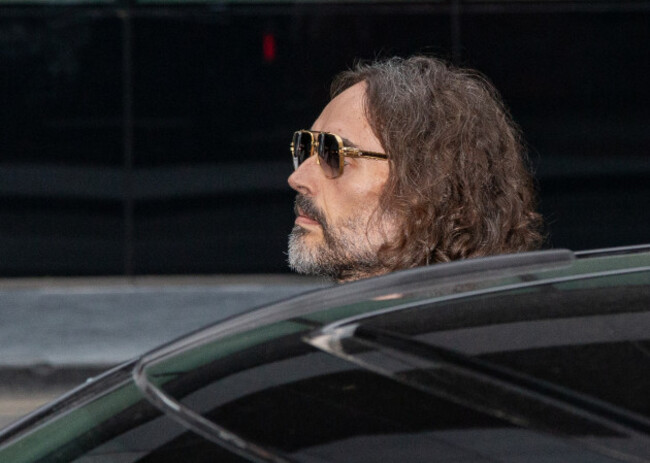
Looking back now, Russell Brand showed us who he was. But the culture at the time was friendly to a man like him, and the chances of getting justice for sexual crimes by celebrities was infinitesimal.
There are many questions today for the entertainment industry that Brand thrived inside for so long, given what he was allowed to get away with saying and doing in public.
The women who took the cases against Brand did so because during the MeToo movement, the power of multiple voices forced society to acknowledge that men in positions of power had abused and damaged people.
Undoubtedly there are other people who have suffered at the hands of celebrities. But the path towards justice for those silent victims is likely to be long and arduous.
At least today’s verdict shows that justice is still there to reach for. But the heavy feeling of sadness and rage that many of us feel over what happened? The questions about cultural complicity, about how easy it is to be fooled?
That’s a burden that’s hard to shake off.
To embed this post, copy the code below on your site












have your say