We need your help now

Support from readers like you keeps The Journal open.

You are visiting us because we have something you value. Independent, unbiased news that tells the truth. Advertising revenue goes some way to support our mission, but this year it has not been enough.

If you've seen value in our reporting, please contribute what you can, so we can continue to produce accurate and meaningful journalism. For everyone who needs it.

Sitdown Sunday: What spending three days in total darkness can do to the mind

Settle down in a comfy chair with some of the week’s best longreads.

IT’S A DAY of rest, and you may be in the mood for a quiet corner and a comfy chair.

We’ve hand-picked some of the week’s best reads for you to savour.

1. Who turned out the lights?

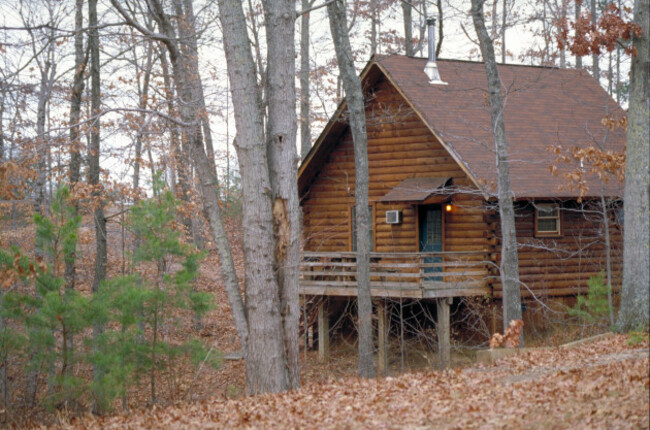
log-cabin-in-the-woods A log cabin in the woods. Alamy Stock Photo Alamy Stock Photo

For most people, spending three days alone in a cabin in the woods in complete darkness would be the stuff of nightmares. But this sensory deprivation retreat is aimed at cutting out the noise to reflect and find clarity. Chris Colin gave it a try. 

(The New York Times Magazine, approx 18 mins reading time)

Gaza. Ukraine. Sudan. School shootings. Terrible images came roaring out of some corner of my mind. One by one they scrolled, boiling with death and terror and heartbreak. I couldn’t move, just sat there holding my bowl. It’s not that I don’t ponder these horrors in daily life — it’s that I contain them. I’ll read the latest awfulness and then veer into outrage, or political strategy, or more reading, and then leave for car-pool duty. Now all I could do was sit with that awfulness. A strange dam broke. Just minutes later, the tape along the bathroom door came loose, lighting up that side of the room. I shot up to cover the leak, only to discover I imagined it. I trekked to my cushion, and I was now inside a snow cave. The cave morphed into the Milky Way, so vivid that comets zipped by. Soon I was in an old stone fortress. (Habsburgian, I somehow knew.) Moonlight poured through a hole in the roof, bathing the floor in a pale blue and illuminating a column of dust. In normal life, I struggle to summon visuals in my head; here I was Rembrandt.

2. Daniel Kinahan

Ed Caesar’s in depth investigation into the wanted criminal and the billion-dollar drugs empire he commands from Dubai is an excellent read. 

(The New Yorker, approx 45 mins reading time)

Kelly said that the Kinahans often worked with a powerful Hezbollah operative whom he called the Ghost. (The operative was connected to the Kinahans through a Dutch criminal named, unimprovably, Mink Kok.) According to Kelly, the relationship between the Ghost and the Kinahans became close enough that, in 2015, the Irish group did Hezbollah a favor: it arranged the assassination of a fifty-six-year-old Iranian electrician living under a false identity in Almere, a sleepy town in the Netherlands. The regime in Tehran believed that, in 1981, the electrician, Mohammad Reza Kolahi—then a student and a member of an Iranian dissident group—had planted a bomb at the Islamic Republican Party’s headquarters, killing seventy-three people. He fled the country, but was sentenced to death in absentia. The Kinahan link to the murder wasn’t immediately obvious. But, a few months after Kolahi was killed, Irish police executed a search warrant on a Dublin apartment linked with the Kinahan gang. There, they found a corpulent Dutch Moroccan gangster, Naoufal (the Belly) Fassih, who spoke broken English, carried two fake I.D.s, and wore a watch worth tens of thousands of dollars.

3. Gold rush

bankershandsinwhiteglovesbankvaultmanagerholdinga Bars of gold bullion. Shutterstock Shutterstock

The price of the precious metal has soared due to a rise in people investing in it. But why is this happening, and how long will it last? 

(Financial Times, approx 13 mins reading time)

The big engine underlying the rally since 2022 has been record purchases by central banks, mainly in developing countries, who want to diversify their reserve assets away from the US dollar. On top of that, a more recent wave of institutional and retail buying has taken the market by surprise: a record $26bn poured into gold-backed exchange traded funds during the third quarter — as an investor community that has long been sceptical about the incomeless asset has been overtaken by what some dubbed “gold-plated Fomo”. On the back of the surging flows, Société Générale has said that reaching $5,000 per troy ounce is “increasingly inevitable”. Every storyline of 2025 is invoked as a reason to buy. A haven from Donald Trump’s America and a less stable world; protection from future debt crises in rich countries; and the sole remaining refuge from richly priced stocks when bonds are wobbling.

4. Put out to pasture

Actors have been campaigning against studios using AI to replicate their performances for a while now. It turns out the same thing is happening to animal actors, leaving trainers worried about the future of their profession. 

(The Hollywood Reporter, approx 6 mins reading time)

“It has certainly impacted the studio animal trainers and the studio animal business already quite a lot,” says Karin McElhatton, owner of Studio Animal Services, which houses Rocco and scores of other critters, from dozens of cats to a “retired squirrel” to a duck named Bob, supplying animal talent for productions like Ghostbusters, L.A. Confidential and CSI: Miami. AI isn’t the only challenge: The fallout from COVID, the 2023 strikes and the overall contraction of the entertainment business also have hit hard. But some in the field fear virtual animals could be the final blow.

A few dozen miles south, Benay Karp is also seeing a downturn. The owner of Benay’s Bird & Animal Rentals, she estimates the number of jobs her animals are getting is down to just 40 percent of what it was pre-pandemic. Karp specializes in small wildlife and birds, though most of her work comes from dogs and cats. Her feathered performers have appeared in Mirror Mirror and she supplied all the animals for years on Grace and Frankie. “I don’t think I’ve had a call for a woodpecker in probably three or four years, maybe five years. I have a flock of seagulls. I think I’ve only gotten one job for them in the last year, where they used to work all the time.”

5. The East Wing

construction-workers-atop-the-u-s-treasury-bottom-right-watch-as-work-continues-on-a-largely-demolished-part-of-the-east-wing-of-the-white-house-thursday-oct-23-2025-in-washington-before-cons The East Wing of the White House has now been completely removed. Alamy Stock Photo Alamy Stock Photo

Photographs of the rubble that once was the East Wing of the White House went viral this week after Donald Trump had it demolished to make way for his new ballroom. Elisabeth Bumiller wrote about it. 

(The New York Times, approx 8 mins reading time)

A New York Times analysis of satellite imagery showed that the demolition included the Jacqueline Kennedy Garden and the East Colonnade, which connected the East Wing to the White House and included the president’s theater. The East Wing’s destruction prompted outrage from preservationists and Democrats, and mourning from those who once worked there. “There was never a day I didn’t catch my breath walking into the East Wing,” said Laura Schwartz, the White House director of events in the Clinton administration. “That’s what makes the loss to me so painful. It’s not just a building. It’s the living history.” “It was such a breath of fresh air from the West Wing,” said Stephanie Grisham, a White House press secretary and chief of staff to Melania Trump, the first lady, during Mr. Trump’s first term. “I hate to see that kind of history literally being demolished in front of our eyes.”

6. The Goon Squad

Daniel Kolitz’s bleak report on an internet-based subculture that has come about due to the combination of male loneliness and their unrestricted access to pornography. 

(Harper’s, approx 32 mins reading time)

Those early-COVID images of depopulated city streets—these were their precise corollary. They showed you where the people went. Or where at least some of them did, likely the ones who were not exactly models of stability and robust mental health to begin with. Even so, it seemed beyond dispute that sixty years ago some of these gooners would have been fathers. Small-business owners. Dependable men in hats riding slow commuter trains, their mindscapes perfumed with thoughts of stocks, bonds, lawn care. Well, what could you do? Certain social systems had failed, certain historical trend lines had converged, and now we had these guys to deal with.

…AND A CLASSIC FROM THE ARCHIVES…

What really happened at 777 Pine Street?

(Popular Mechanics, approx 32 mins reading time)

On the way out, we stopped by the windows. “There’s no way we can afford this,” Ann said, “but it would be such a cool place to have a party.” Afterward, we shook off the spell. It was impractical, too big for a family of three. But a few weeks later, the price dropped, and we asked for another look, and began a series of what-ifs and yeah-buts: If we did this, we would need to replace at least part of the roof; the furnace was ancient; and the upstairs… What was the deal with the upstairs? It was seemingly once a buttoned-​on in-law apartment, but it was now gutted down to studs and subfloor. And yet. The house was so big, we could rent out the second floor, which would cover some costs. And what if the roof really wasn’t so bad? What if the furnace held out for a winter or two? All we knew for sure was that we wanted to live in that house. Years later, I remember that I had tried to talk Ann into it, and she recalls fervently selling me on the idea. Maybe both recollections are true.

Note: The Journal generally selects stories that are not paywalled, but some might not be accessible if you have exceeded your free article limit on the site in question.

Readers like you are keeping these stories free for everyone...
A mix of advertising and supporting contributions helps keep paywalls away from valuable information like this article. Over 5,000 readers like you have already stepped up and support us with a monthly payment or a once-off donation.

Close
JournalTv
News in 60 seconds